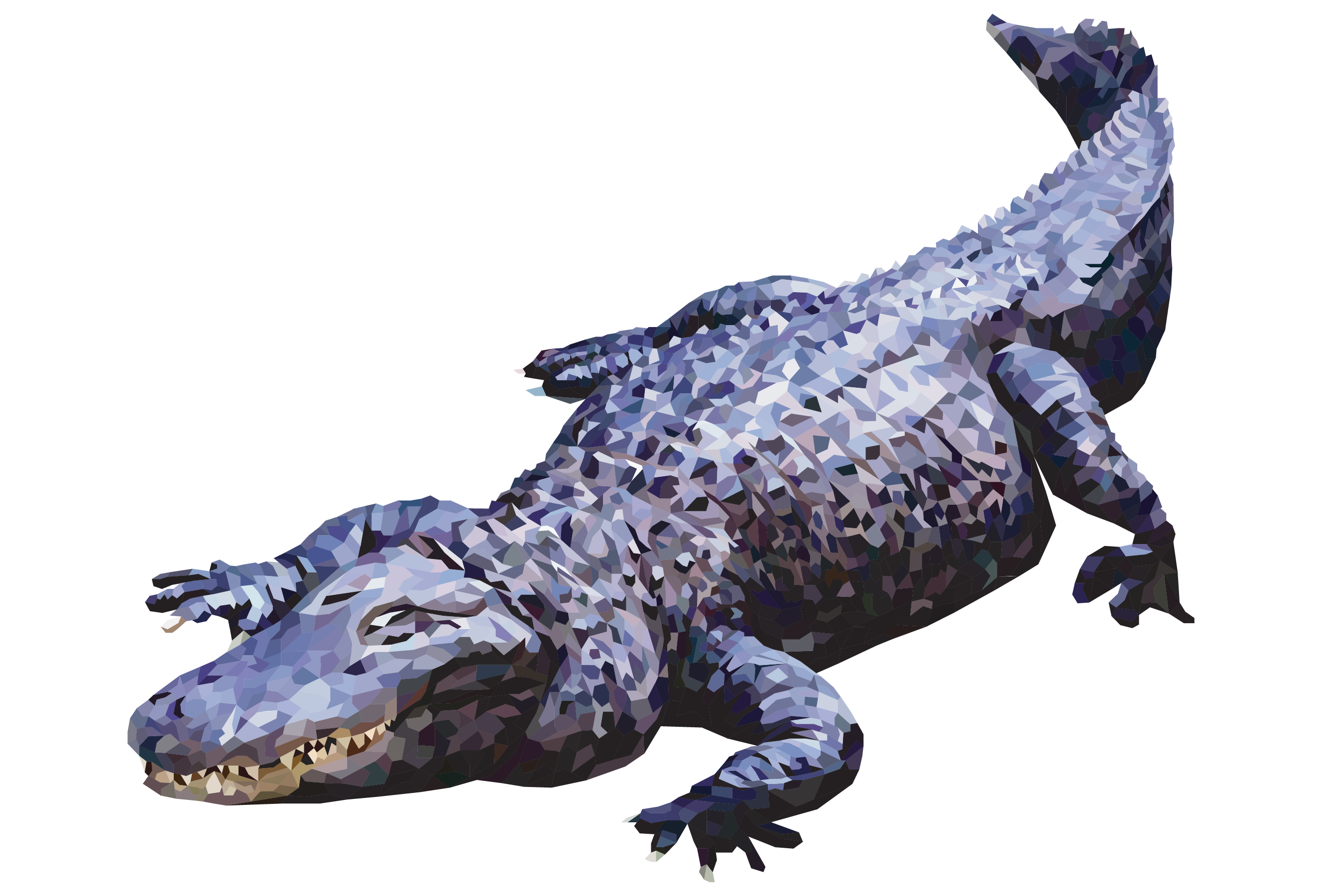
Alligator Mississippiensis
The American Alligator, sometimes referred to colloquially as a gator or common alligator, is a large crocodilian reptile endemic to the Southeastern United States. It is one of two extant species in the genus Alligator within the family Alligatoridae; it is larger than the only other living alligator species, the Chinese alligator. The American alligator inhabits freshwater wetlands, such as marshes and cypress swamps from Texas to southeastern and coastal North Carolina. It is distinguished from the sympatric American crocodile by its broader snout, with overlapping jaws and darker coloration, and is less tolerant of saltwater but more tolerant of cooler climates than the American crocodile. Dorsally, adult American alligators may be olive, brown, gray, or black. However, they are on average one of the most darkly colored modern crocodilians and can be reliably be distinguished by color via their more blackish dorsal scales against crocodiles.
When on land, an American alligator moves either by sprawling or walking, the latter involving the reptile lifting its belly off the ground. The sprawling of American alligators and other crocodilians is not similar to that of salamanders and lizards, being similar to walking. Therefore, the two forms of land locomotion can be termed the “low walk” and the “high walk”. American alligators primarily bask on shore, but also climb into and perch on tree limbs to bask if no shoreline is available. This is not often seen, since if disturbed, they quickly retreat back into the water by jumping from their perch. American alligators are apex predators and consume fish, amphibians, reptiles, birds, and mammals. Hatchlings feed mostly on invertebrates. As with all crocodilians, and as opposed to many mammals where size eventually diminishes with old age, healthy American alligators may continue to grow throughout their lives and the oldest specimens are the largest.