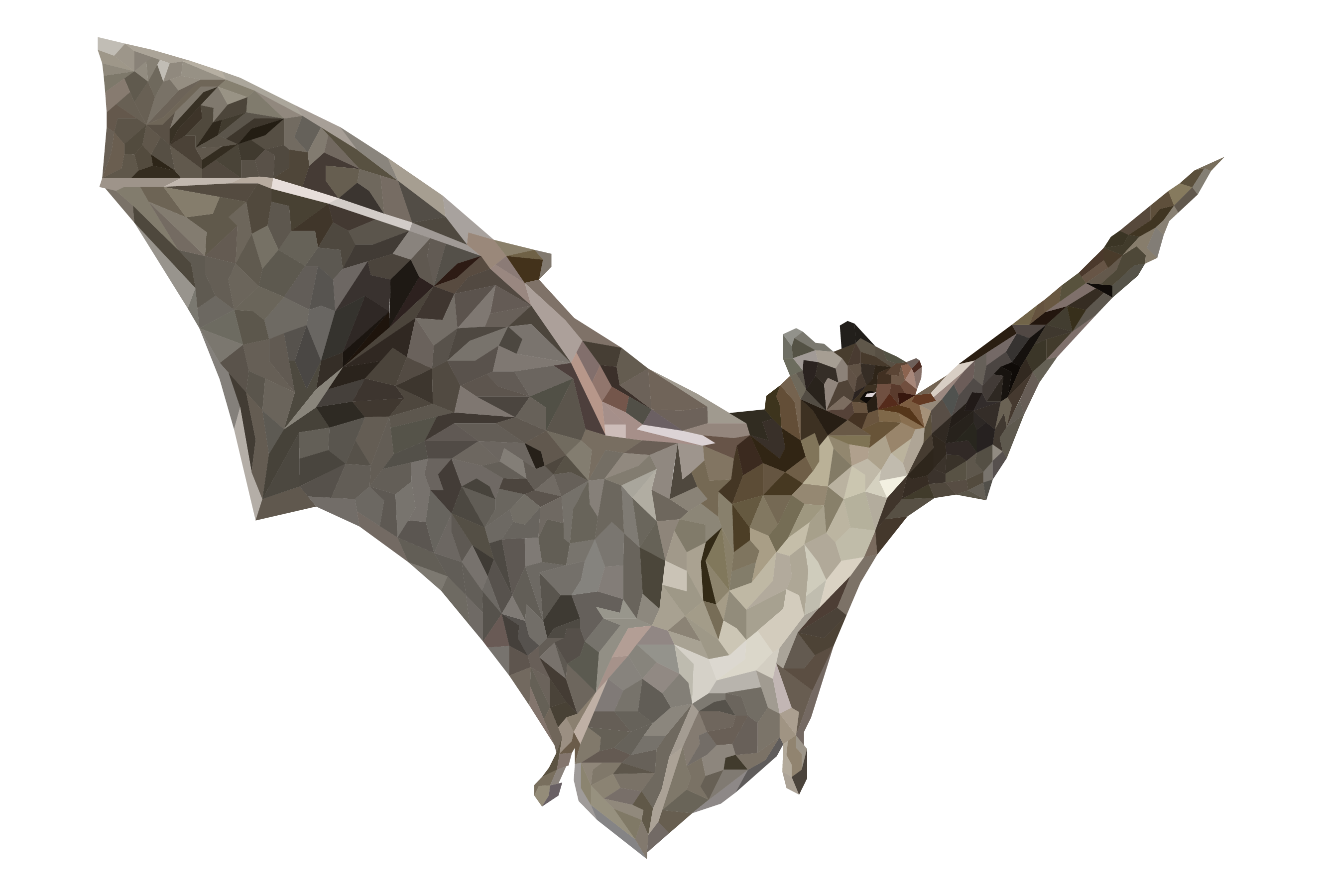
Myotis Lucifugus
The Little Brown Bat is a species of mouse-eared microbat found in North America. It has a variety of fur colors possible, with pelage ranging from pale tan or reddish to dark brown. Its belly fur is a lighter color than its back fur. Its fur is glossy in appearance, though less so on its belly. It is similar in appearance to several other mouse-eared bats, including the Indiana bat, northern long-eared bat, and Arizona myotis, to which it is closely related.
It is nocturnal, foraging for its insect prey at night, prey species include beetles, flies, mayflies, true bugs, ants, moths, lacewings, stoneflies, and caddisflies. To locate their prey, most insect-eating bats use a system called echolocation. This supersense is similar to sonar used in ships. They roost in hollow trees or buildings during the day, among less common roost types. It navigates and locates prey with echolocation. It has few natural predators, but may be killed by owls, as well as terrestrial predators such as raccoons. Other sources of mortality include diseases such as rabies and white-nose syndrome. White-nose syndrome has been a significant cause of mortality since 2006, killing over one million little brown bats by 2011. In the Northeastern United States, population loss has been extreme. As of 2018, the little brown bat is evaluated as an endangered species by the IUCN, a dramatic change from 2008 when it was designated as the lowest conservation priority, least concern. Until recently, the species was regarded as one of the most common bats in North America. Humans frequently encounter the little brown bat due to its habit of roosting in buildings. Colonies in buildings are often considered pests because of the production of waste or the concern of rabies transmission. Little brown bats rarely test positive for rabies, however.