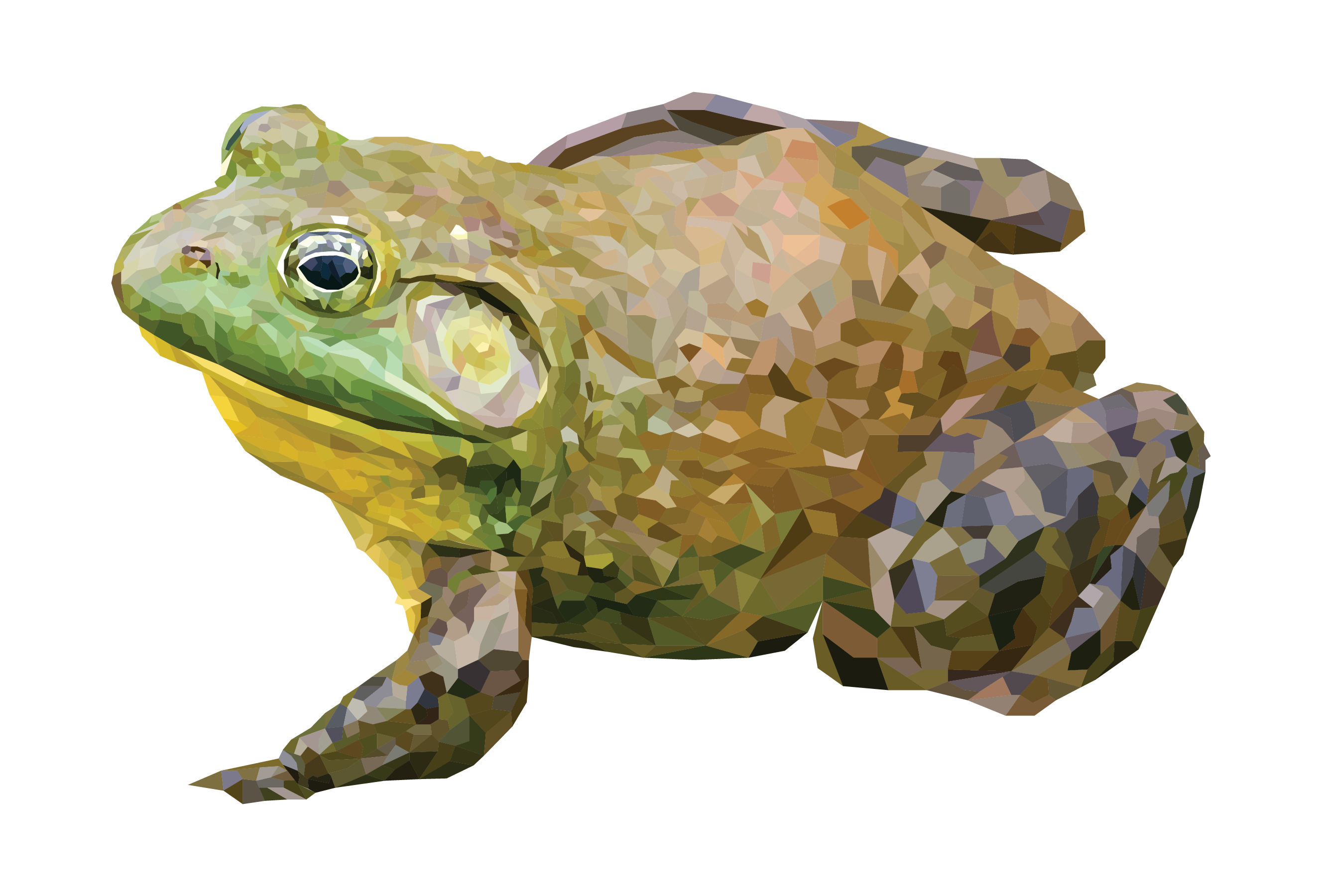
Lithobates Catesbeianus
The American Bullfrog, often simply known as the bullfrog in Canada and the United States, is an amphibious frog, a member of the family Ranidae, or “true frogs”. The Bullfrog has an olive green back and sides blotched with brownish markings and a whitish belly spotted with yellow or gray. The upper lip is often bright green and males have yellow throats. It typically inhabits large, permanent water bodies, such as swamps, ponds, and lakes, though it can also reside along smaller creeks and streams where it is usually found along the water’s edge.
The male bullfrog defends a territory during the breeding season. His call is reminiscent of the roar of a bull, which gives the frog its common name. The frog is native to southern and eastern parts of the United States and Canada, but has been widely introduced across other parts of North, Central and South America, Western Europe, and parts of Asia, and in some areas is regarded as a pest and an invasive species. Bullfrogs are opportunistic, ambush predators that prey on any small animal they can overpower and stuff down their throats. Bullfrog stomachs have been found to contain rodents, small reptiles, other frogs and toads, amphibians, crayfish, small birds, scorpions, tarantulas and bats, as well as the many types of invertebrates, such as insects, which are the usual food of Bullfrogs. The bullfrog is harvested for use as food in North America and in several other countries into which it has been introduced. Some international trade in frog legs occurs for human consumption. Bullfrogs are an important item of prey to many birds, North American river otters, predatory fish, and occasionally other amphibians.