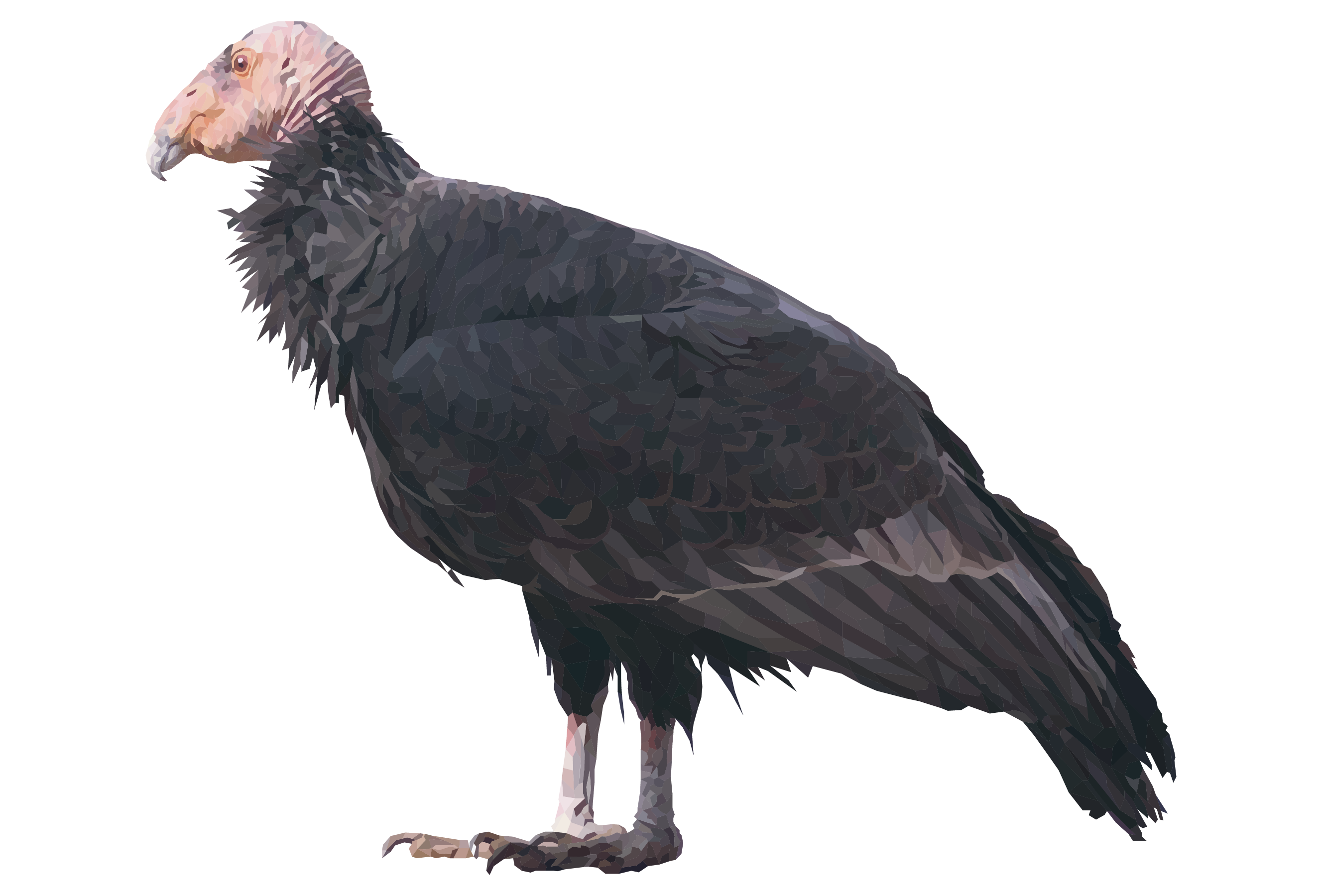
Gymnogyps Californianus
The California Condor is a New World vulture, the largest North American land bird. Although other fossil members are known, it is the only surviving member of the genus Gymnogyps. The condors live in rocky shrubland, coniferous forests, and oak savannas. They are often found near cliffs or large trees, which they use as nesting sites. Individual birds have a huge range and have been known to travel up to 160 mi in search of carrion. Their plumage is black with patches of white on the underside of the wings; the head is largely bald, with skin color ranging from gray on young birds to yellow and bright orange on breeding adults. The condor is a scavenger and eats large amounts of carrion. It is one of the world’s longest-living birds, with a lifespan of up to 60 years. When in flight, the movements of the condor are remarkably graceful. The lack of a large sternum to anchor their correspondingly large flight muscles restricts them to being primarily soarers. The birds flap their wings when taking off from the ground, but after attaining a moderate elevation they largely glide, sometimes going for miles without a single flap of their wings. They have been known to fly up to speeds of 56 mph and as high as 15,100 ft.
Condor numbers declined in the 20th century due to poaching, lead poisoning, and habitat destruction. A conservation plan was put in place by the United States government that led to the capture of all the remaining wild condors which was completed in 1987, with a total population of 27 individuals. These surviving birds were bred at the San Diego Wild Animal Park and the Los Angeles Zoo. Numbers rose through captive breeding and, beginning in 1991, condors were reintroduced into the wild. Since then, its population has grown, but the California condor remains one of the world’s rarest bird species.