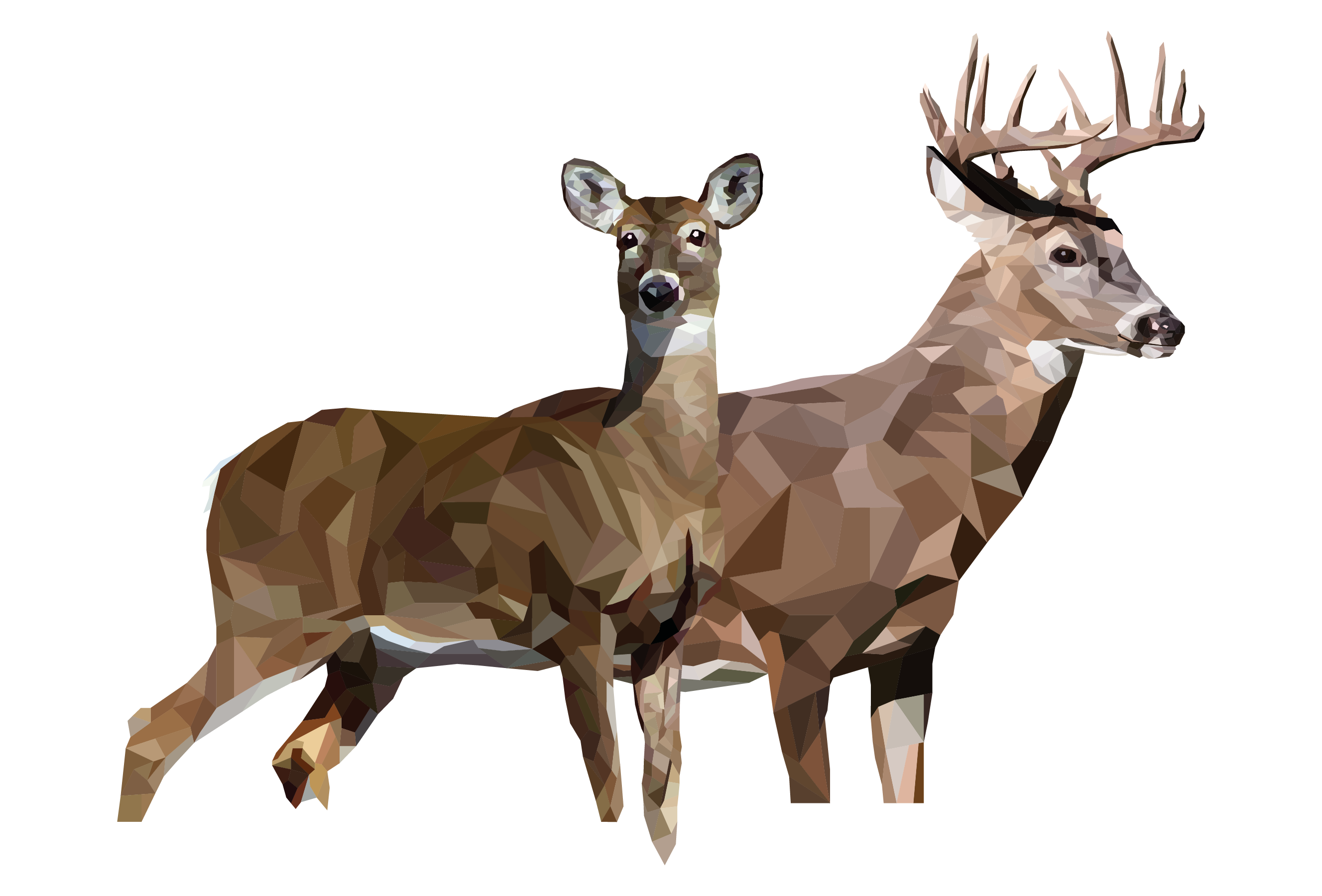
Odocoileus Virginianus
The White-Tailed Deer, also known as the whitetail or Virginia deer, is a medium-sized deer native to North America. In the Americas, it is the most widely distributed wild ungulate. In North America, the species is widely distributed east of the Rocky Mountains as well as in southwestern Arizona and most of Mexico. Texas is home to the most white-tailed deer of any U.S. state or Canadian province, with an estimated population of over four million. The deer’s coat is a reddish-brown in the spring and summer and turns to a gray-brown throughout the fall and winter. The deer can be recognized by the characteristic white underside to its tail. It raises its tail when it is alarmed to warn the predator that it has been detected. White-tailed deer’s horizontally slit pupils allow for good night vision and color vision during the day. Males regrow their antlers every year. Antlers begin to grow in late spring, covered with a highly vascularised tissue known as velvet.
White-tailed deer eat large amounts of food, commonly eating legumes and foraging on other plants, including shoots, leaves, prairie forbs, and grasses. They also eat acorns, fruit, and corn. Their special stomachs allow them to eat some things humans cannot, such as mushrooms and poison ivy. The white-tailed deer is a ruminant, which means it has a four-chambered stomach. Each chamber has a different and specific function that allows the deer to eat a variety of different foods, digesting it at a later time in a safe area of cover. For many types of deer in modern English usage, the male is a buck and the female a doe, but the terms vary with dialect, and according to the size of the species. There are several natural predators of white-tailed deer with wolves, cougars, American alligators, jaguars and humans being the most effective natural predators.