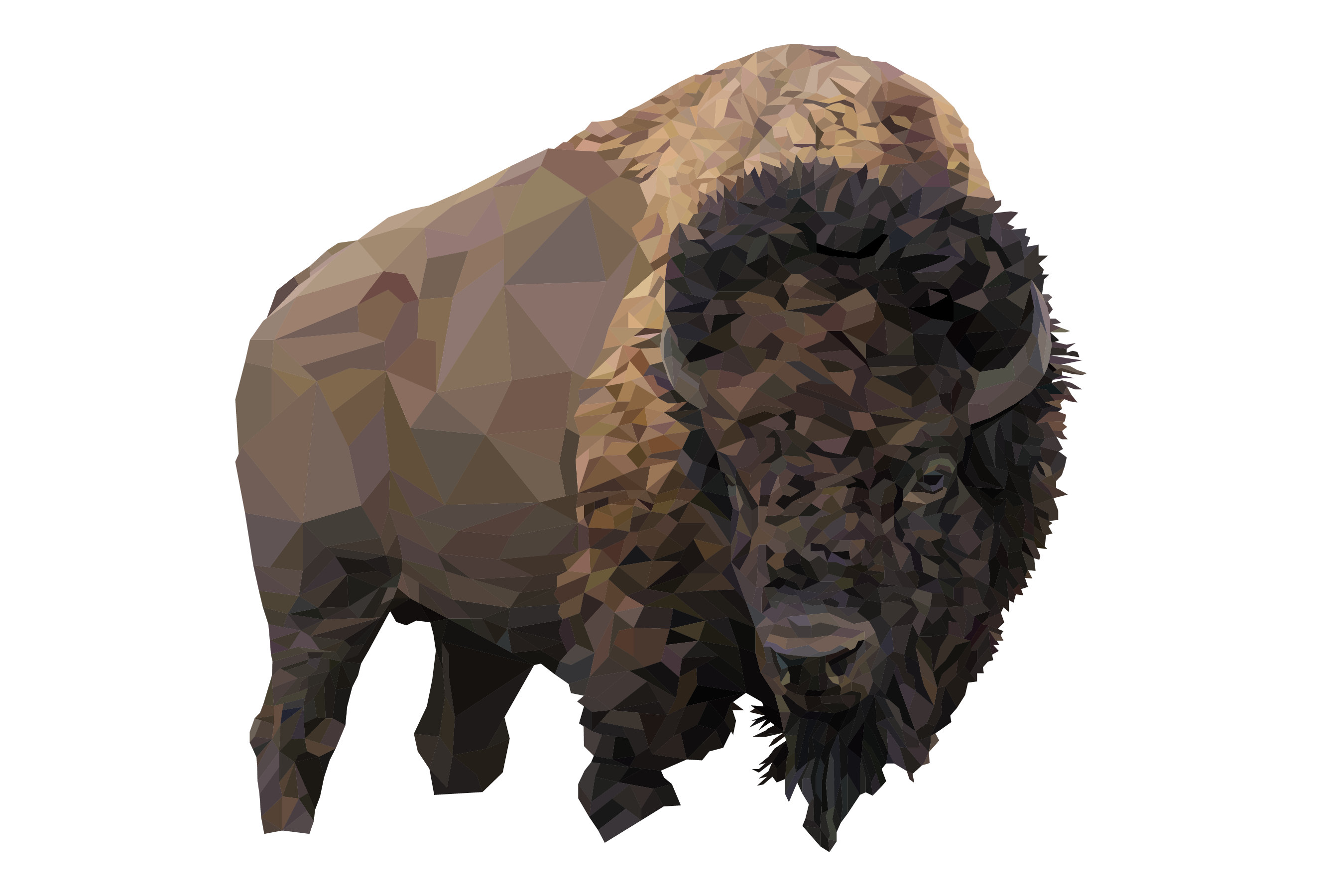
Bison Bison
The American Bison or simply bison, also commonly known as the American buffalo or simply buffalo, is a North American species of bison that once roamed North America in vast herds. Its historical range, by 9000 BCE, is described as the great bison belt, a tract of rich grassland that ran from Alaska to the Gulf of Mexico, east to the Atlantic Seaboard as far north as New York and south to Georgia. It nearly became extinct by a combination of commercial hunting and slaughter in the 19th century and introduction of bovine diseases from domestic cattle. With a population in excess of 60 million in the late 18th century, the species was down to 541 animals by 1889. Recovery efforts expanded in the mid-20th century, with a resurgence to roughly 31,000 animals today, largely restricted to a few national parks and reserves. American bison live in river valleys, and on prairies and plains. Some lightly wooded areas are also known historically to have supported bison.
A bison has a shaggy, long, dark-brown winter coat, and a lighter-weight, lighter-brown summer coat. Bison are herbivores, grazing on the grasses and sedges of the North American prairies. Their daily schedule involves two-hour periods of grazing, resting, and cud chewing, then moving to a new location to graze again. Bison were described as having a “wild and ungovernable temper”; they can jump close to 6 ft vertically, and run 35–40 mph when agitated. This agility and speed, combined with their great size and weight, makes bison herds difficult to confine, as they can easily escape or destroy most fencing systems, including most razor wire. Bison herds have dominance hierarchies that exist for both males and females. A bison’s dominance is related to its birth date. Bison born earlier in the breeding season are more likely to be larger and more dominant as adults. Thus, bison are able to pass on their dominance to their offspring as dominant bison breed earlier in the season.