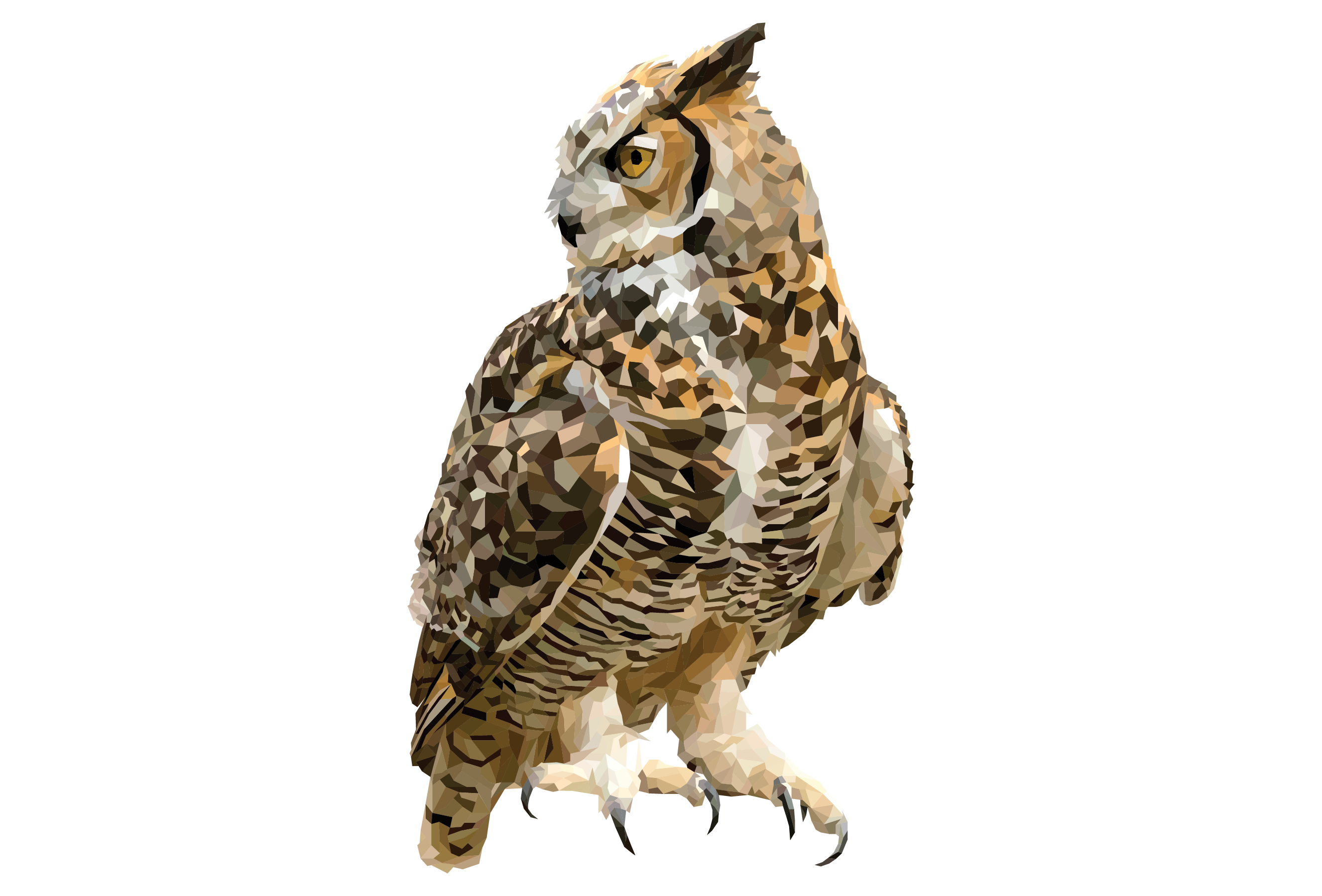
Bubo Virginianus
The Great Horned Owl, also known as the tiger owl or the hoot owl, is a large owl native to the Americas. It is an extremely adaptable bird with a vast range and is the most widely distributed true owl in the Americas. The great horned owl is generally colored for camouflage. The underparts of the species are usually light with some brown horizontal barring; the upper parts and upper wings are generally a mottled brown usually bearing heavy, complex, darker markings. All subspecies are darkly barred to some extent along the sides, as well. The great horned owl is the heaviest extant owl in Central and South America and is the second-heaviest owl in North America, after the closely related, but very different-looking snowy owl. It is heavily built, with a barrel-shaped body, a large head, and broad wings.
Like most owls, the great horned owl makes great use of secrecy and stealth. Due to its natural-colored plumage, it is well camouflaged both while active at night and while roosting during the day. Pine and other coniferous trees may be preferred where available since they are particularly dense and provide cover throughout the year. Prey can vary greatly based on opportunity. According to one author, “Almost any living creature that walks, crawls, flies, or swims, except the large mammals, is the great horned owl’s legitimate prey”. In fact, the great horned owl has the most diverse prey profile of any raptor in the Americas. Its primary diet is rabbits and hares, rats and mice, and voles, although it freely hunts any animal it can overtake, including rodents and other small mammals, larger mid-sized mammals, birds, reptiles, amphibians, and invertebrates. The great horned owl is one of the earliest nesting birds in North America, often laying eggs weeks or even months before other raptorial birds.