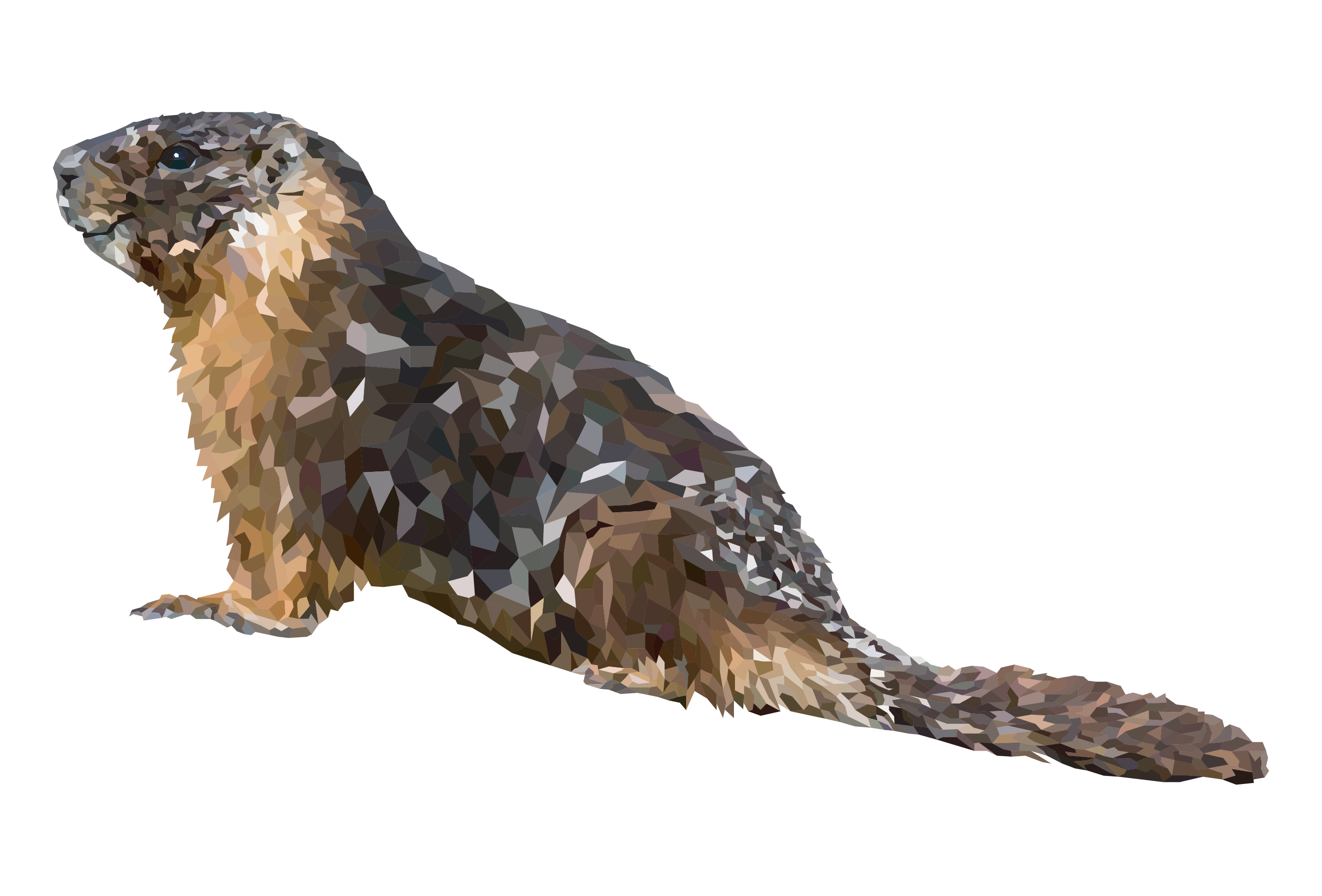
Marmota Olympus
The Olympic Marmot is a rodent in the squirrel family, Sciuridae; it occurs only in the U.S. state of Washington, on the middle elevations of the Olympic Peninsula. In 2009, it was declared the official endemic mammal of Washington. The Olympic marmot is well-adapted to its generally cold natural habitat, where there is snowfall almost every month of the year on the mountain slopes and barren grasslands. This marmot is about the size of a domestic cat. It can be identified by a wide head, small eyes and ears, stubby legs, and a long, bushy tail. Its sharp, rounded claws aid in digging burrows. The coat is double-layered, consisting of soft thick underfur, for warmth, and coarser outer hairs. Infant marmots’ fur is dark gray in color; this changes in the yearling period to grayish brown with lighter patches. The adult coat is brown on the body with some smaller white or pale brown patches for most of the year, becoming darker overall as the year progresses.
The species has a diet consisting mainly of a variety of meadow flora, including dry grasses, which it also uses as bedding in burrows. It is preyed on by various terrestrial mammals and avian raptors, but its main predator today is the coyote. The Olympic marmot is rated a species of the least concern by the IUCN. It is protected by law in the Olympic National Park, which contains most of its habitat. The burrows of this marmot are made in colonies, which are found in various mountain locations and differ in size. A colony may contain as few as one marmot family or multiple families with up to 40 marmots. Olympic marmots are very sociable animals which often engage in play fighting and vocalize four different whistles to communicate. During hibernation beginning in September, they are in a deep sleep and do not eat, causing them to lose half their body mass. Adults emerge in May and their young in June. Female marmots reach sexual maturity at three years of age, and produce litters of 1–6 every other mating season.