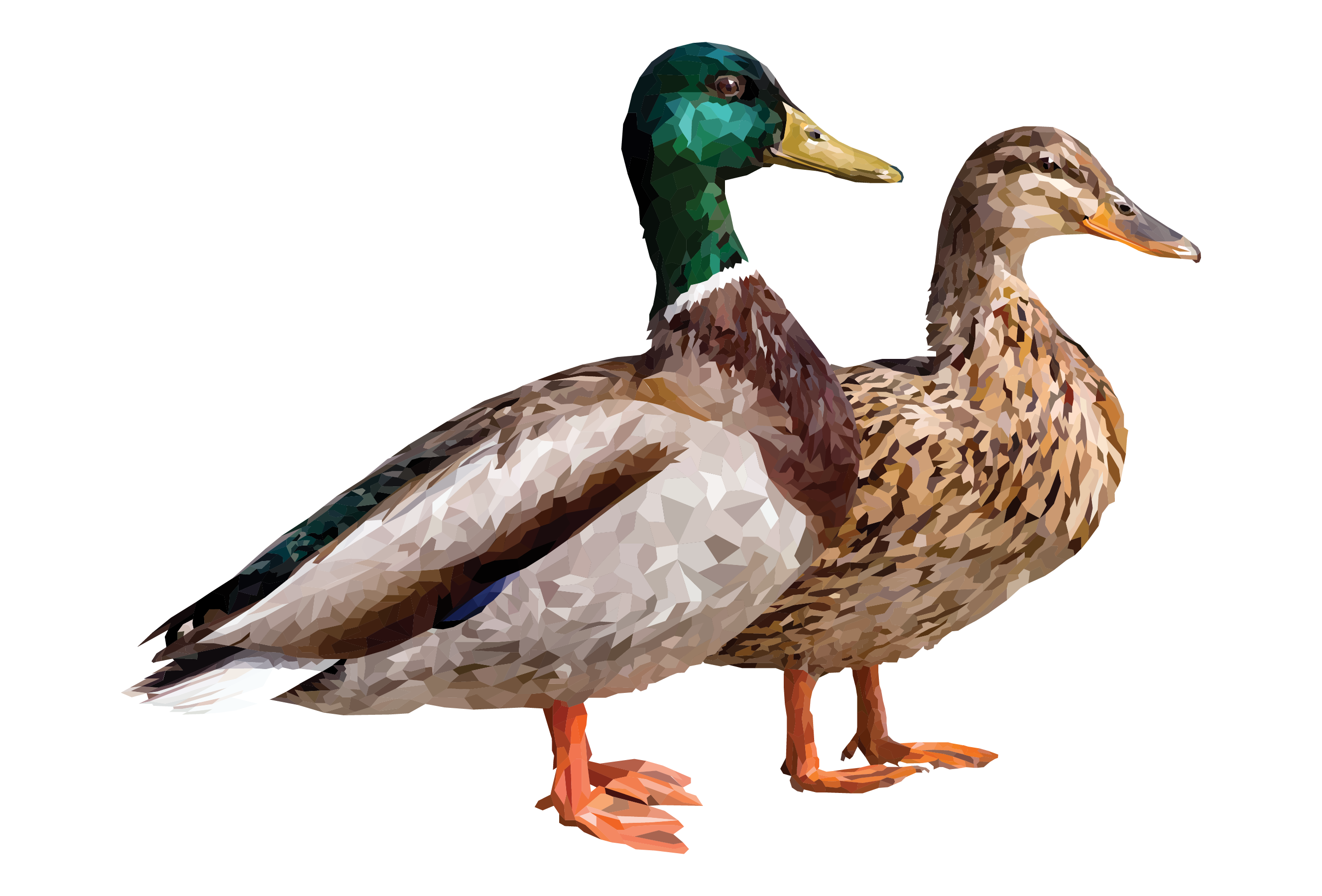
Anas Platyrhynchos
The Mallard is a duck that breeds throughout the temperate and subtropical Americas, Eurasia, and North Africa. The male birds, drakes, have a glossy green head and are gray on their wings and belly, while the females, hens or ducks, have mainly brown-speckled plumage. Both sexes have an area of white-bordered black or iridescent blue feathers called a speculum on their wings; males especially tend to have blue speculum feathers. The mallard is a medium-sized waterfowl species that is often slightly heavier than most other dabbling ducks. Mallards live in wetlands, eat water plants and small animals, and are social animals preferring to congregate in groups or flocks of varying sizes. This species is the main ancestor of most breeds of domesticated ducks. The mallard is considered to be a species of least concern by the International Union for Conservation of Nature. Unlike many waterfowl, mallards are considered an invasive species in some regions. It is a very adaptable species, being able to live and even thrive in urban areas.
Mallards usually form pairs until the female lays eggs at the start of the nesting season, which is around the beginning of spring. The female lays eight to 13 creamy white to greenish-buff spotless eggs, on alternate days. Incubation takes 27 to 28 days and fledging takes 50 to 60 days. The ducklings are precocial and fully capable of swimming as soon as they hatch. Mallards contend with a wide diversity of predators including raptors, snakes, raccoons, opossums, skunks, turtles, large fish and canids, including domesticated ones. The most prolific natural predators of adult mallards are red foxes.