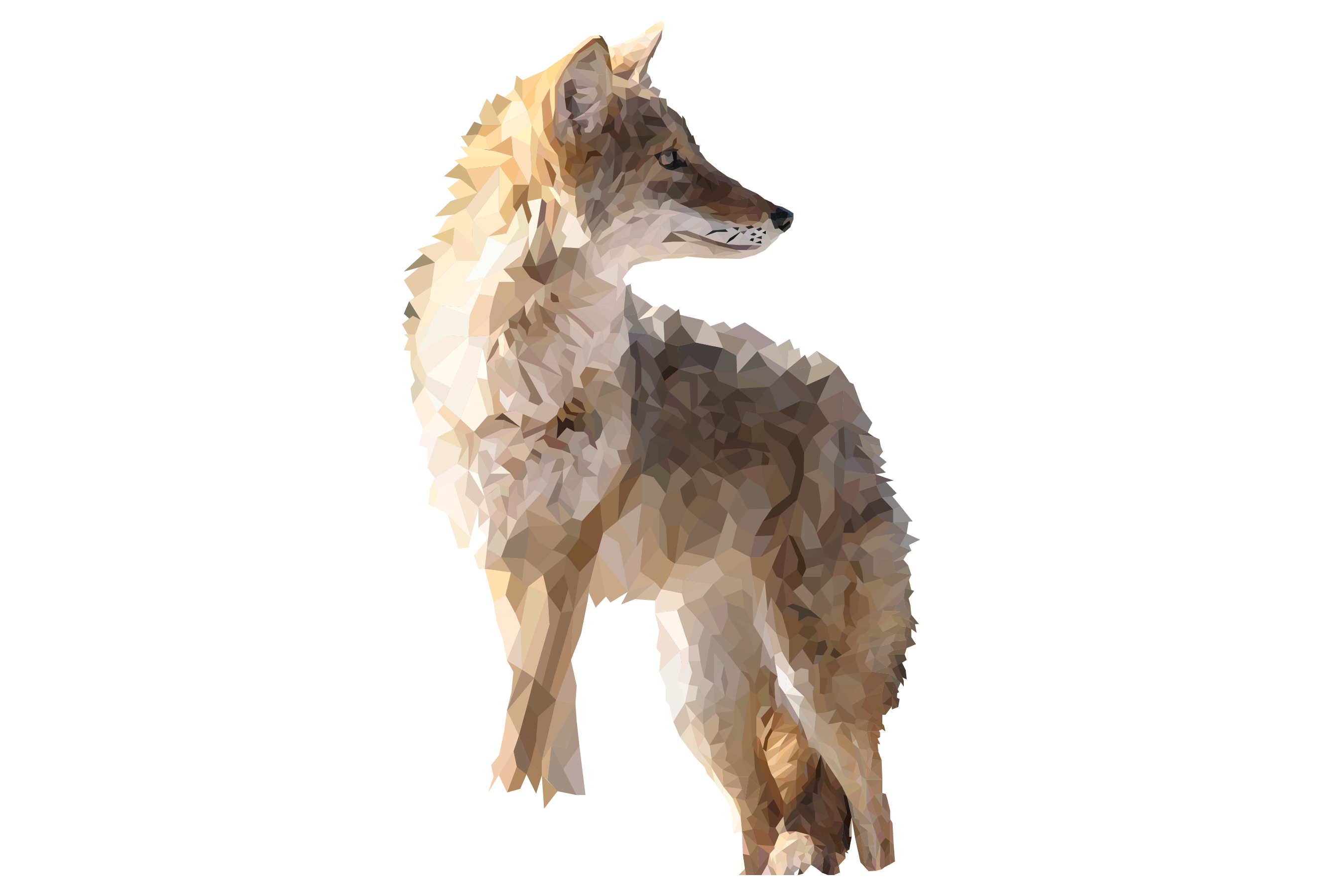
Canis Latrans
The Coyote is a canine native to North America. It is smaller than its close relative, the gray wolf, and slightly smaller than the closely related eastern wolf and red wolf. The coyote is listed as least concern by the International Union for Conservation of Nature due to its wide distribution and abundance throughout North America. As long as it was not in direct competition with the wolf, the coyote ranged from the Sonoran Desert to the alpine regions of adjoining mountains or the plains and mountainous areas of Alberta. With the extermination of the wolf, the coyote’s range expanded to encompass broken forests from the tropics of Guatemala and the northern slope of Alaska. Coyotes walk around 3–10 mi per day, often along trails such as logging roads and paths; they may use iced-over rivers as travel routes in winter. They are often more active around evening and the beginning of the night than during the day. Like many canids, coyotes are competent swimmers, reported to be able to travel at least 0.5 mi across water.
Their fur color is predominantly light gray and red or interspersed with black and white, though it varies somewhat with geography. It is highly flexible in social organization, living either in a family unit or in loosely knit packs of unrelated individuals. Primarily carnivorous, its diet consists mainly of deer, rabbits, hares, rodents, birds, reptiles, fish and invertebrates, though it may also eat fruits and vegetables on occasion. Its characteristic vocalization is a howl made by solitary individuals. Humans are the coyote’s greatest threat, followed by cougars and gray wolves. Being both a gregarious and solitary animal, the variability of the coyote’s visual and vocal repertoire is intermediate between that of the solitary foxes and the highly social wolf. The aggressive behavior of the coyote is more similar to that of foxes than that of wolves and dogs. An aggressive coyote arches its back and lowers its tail.