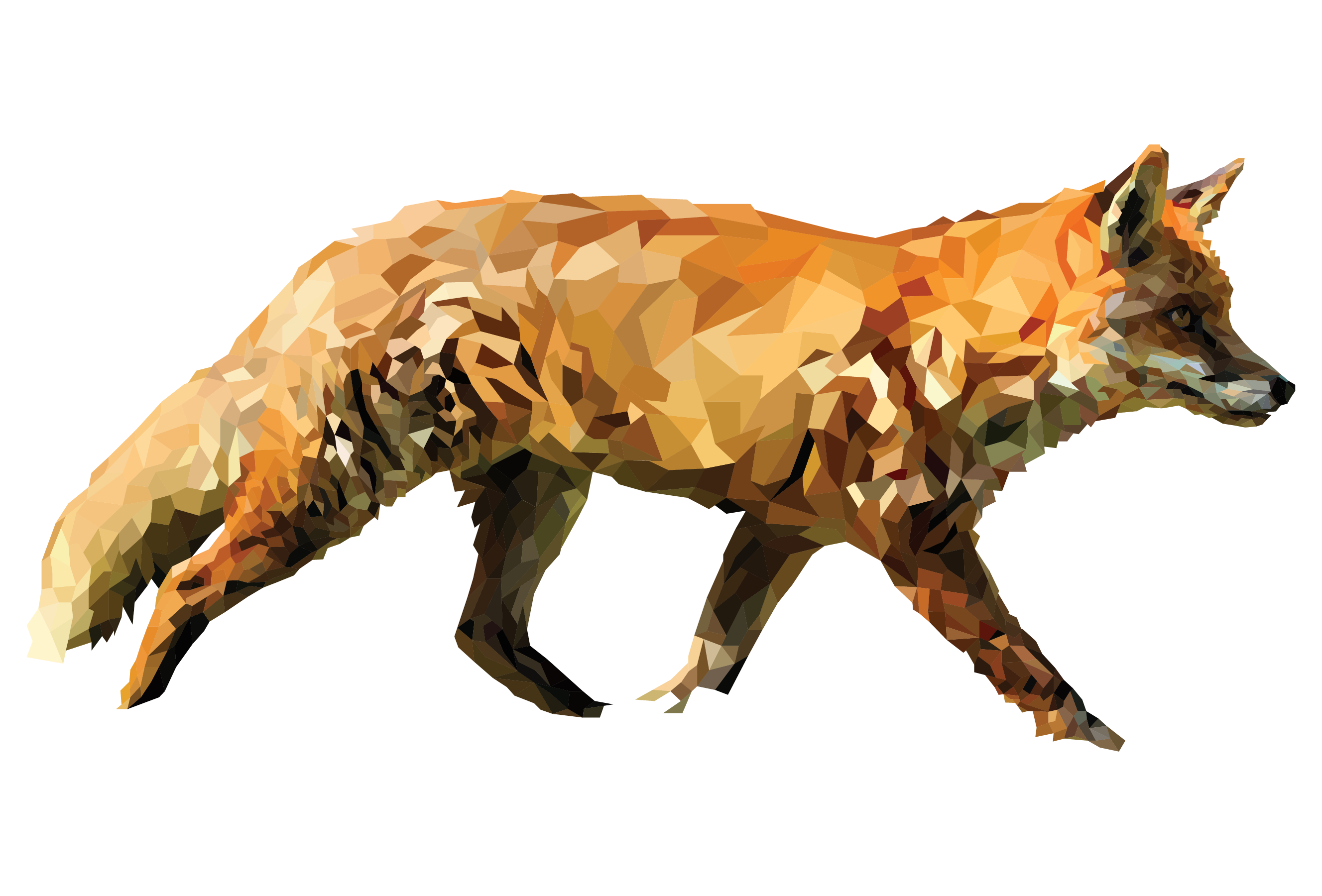
Vulpes Fulvus
The American Red Fox, is the largest of the true foxes and one of the most widely distributed members of the order Carnivora, occurring in North America. Their winter fur is dense, soft, silky and relatively long. There are three main color morphs; red, silver/black and cross. In the typical red morph, their coats are generally bright reddish-rusty with yellowish tints. The backs of the ears are black or brownish-reddish, while the inner surface is whitish. The underside of the tail is pale gray with a straw-colored tint. The tip of the tail is white. The red fox has an elongated body and relatively short limbs. The tail, which is longer than half the body length is fluffy and reaches the ground when in a standing position. They are very agile, being capable of jumping over 6 ft-high fences, and swim well. Their skulls are distinguished from those of dogs by their narrower muzzles, less crowded premolars, more slender canine teeth, and concave rather than convex profiles.
Most red foxes favor living in the open, in densely vegetated areas, though they may enter burrows to escape bad weather. Their burrows are often dug on hill or mountain slopes, ravines, bluffs, steep banks of water bodies, ditches, depressions, gutters, in rock clefts and neglected human environments. Red foxes prefer to dig their burrows on well drained soils. Red foxes prefer to hunt in the early morning hours before sunrise and late evening. Red foxes are omnivores with a highly varied diet. Research showed red foxes consuming over 300 animal species and a few dozen species of plants. They primarily feed on small rodents like voles, mice, ground squirrels, hamsters, gerbils, woodchucks, pocket gophers and deer mice. The cunning Fox is commonly found in Native American mythology, where it is portrayed as an almost constant companion to Coyote. In Japanese mythology, the kitsune are fox-like spirits possessing magical abilities that increase with their age and wisdom.