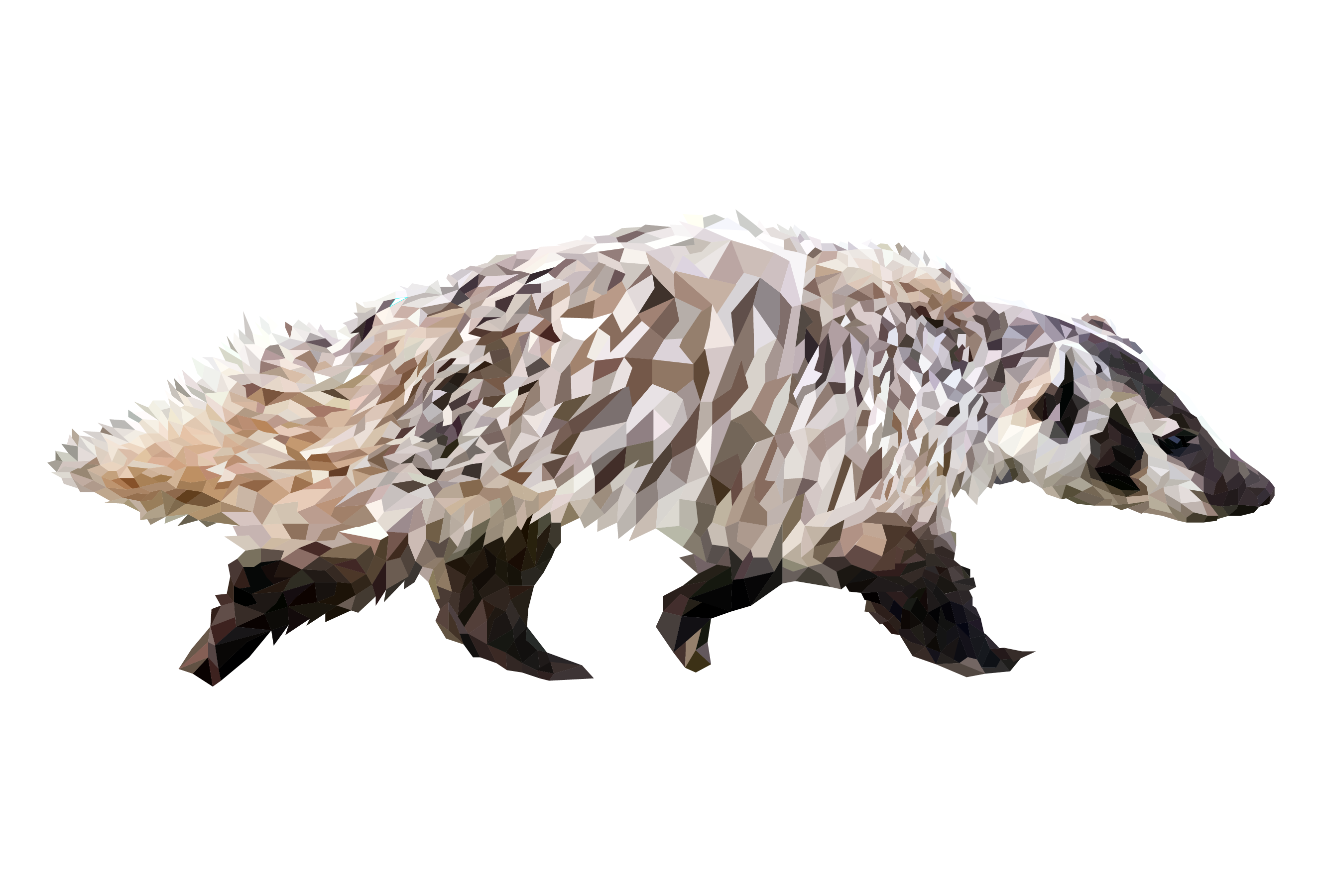
Taxidea Taxus
The American Badger, is a North American badger, somewhat similar in appearance to the European badger, although not closely related. It is found in the western and central United States, northern Mexico, and south-central Canada to certain areas of southwestern British Columbia. The American badger’s habitat is typified by open grasslands with available prey. The species prefers areas such as prairie regions with sandy loam soils where it can dig more easily for its prey. The American badger has most of the general characteristics common to badgers; with stocky and low-slung bodies with short, powerful legs, they are identifiable by their huge foreclaws and distinctive head markings. American badgers have powerful forelimbs. Except for the head, the American badger is covered with a grizzled, brown, black and white coat of coarse hair or fur, giving almost a mixed brown-tan appearance. The coat aids in camouflage in grassland habitat. Its triangular face shows a distinctive black and white pattern, with brown or blackish “badges” marking the cheeks and a white stripe extending from the nose to the base of the head.
American badgers are generally nocturnal; however, in remote areas with no human encroachment they are routinely observed foraging during the day. The American badger is a fossorial carnivore. It preys predominantly on pocket gophers, ground squirrels, moles, marmots & prairie dogs often digging to pursue prey into their dens, and sometimes plugging tunnel entrances with objects. While the American badger is an aggressive animal with few natural enemies, it is still vulnerable to other species in its habitat. Predation on smaller individuals by golden eagles, coyotes and bobcats have been reported. Badgers are normally solitary animals, but are thought to expand their territories in the breeding season to seek out mates. Mating occurs in late summer and early fall, with some males breeding with more than one female. The average lifespan in the wild is 9–10 years, with a record of 14.