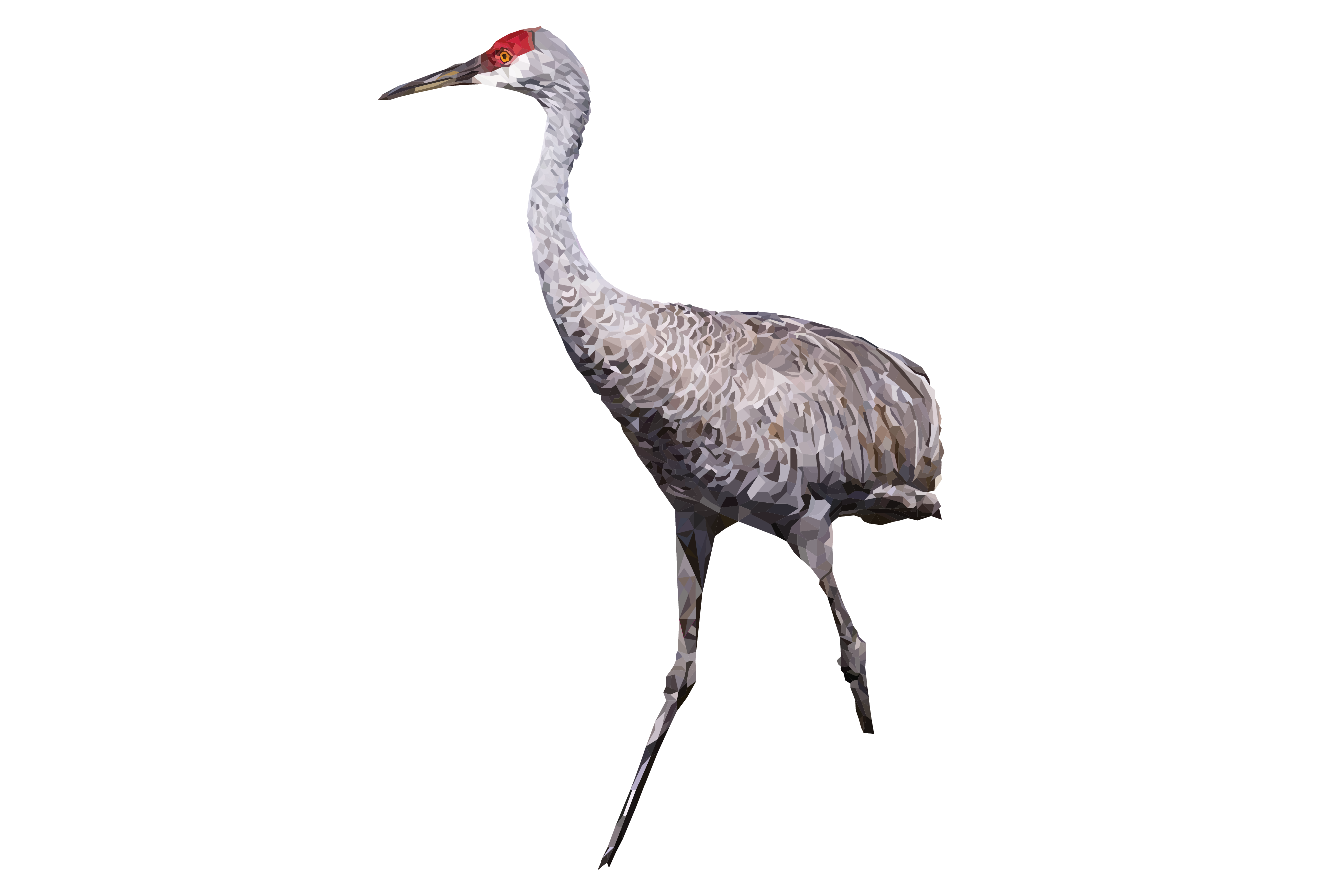
Antigone Canadensis
The Sandhill Crane is a species of large crane of North America and extreme northeastern Siberia. The common name of this bird refers to habitat like that at the Platte River, on the edge of Nebraska’s Sandhills on the American Plains. This is the most important stopover area for the nominotypical subspecies with up to 450,000 of these birds migrating through annually. Adults are gray overall; during breeding, their plumage is usually much worn and stained and looks nearly clay like. Sandhill cranes have red foreheads, white cheeks, and long, dark, pointed bills. In flight, their long, dark legs trail behind, and their long necks keep straight. Immature birds have reddish-brown upperparts and gray underparts. Sandhill cranes’ large wingspans, make them very skilled soaring birds, similar in style to hawks and eagles. Using thermals to obtain lift, they can stay aloft for many hours, requiring only occasional flapping of their wings, thus expending little energy. These cranes frequently give a loud, trumpeting call that suggests a rolled “r” in the throat, and they can be heard from a long distance.
Sandhill cranes are mainly herbivorous, but eat various types of food, depending on availability. They often feed with their bills down to the ground as they root around for seeds and other foods, in shallow wetlands with vegetation or various upland habitats. Cranes readily eat cultivated foods such as corn, wheat, cottonseed, and sorghum. Sandhill cranes are at risk from predators, such as foxes, raccoons, coyotes, wolves, cougars and bobcats. They defend themselves and their young from aerial predators by jumping and kicking. For land predators, they move forward, often hissing, with their wings open and bills pointed. If the predator persists, the crane stabs with its bill, which is powerful enough to pierce the skull of a small carnivore and kicks.