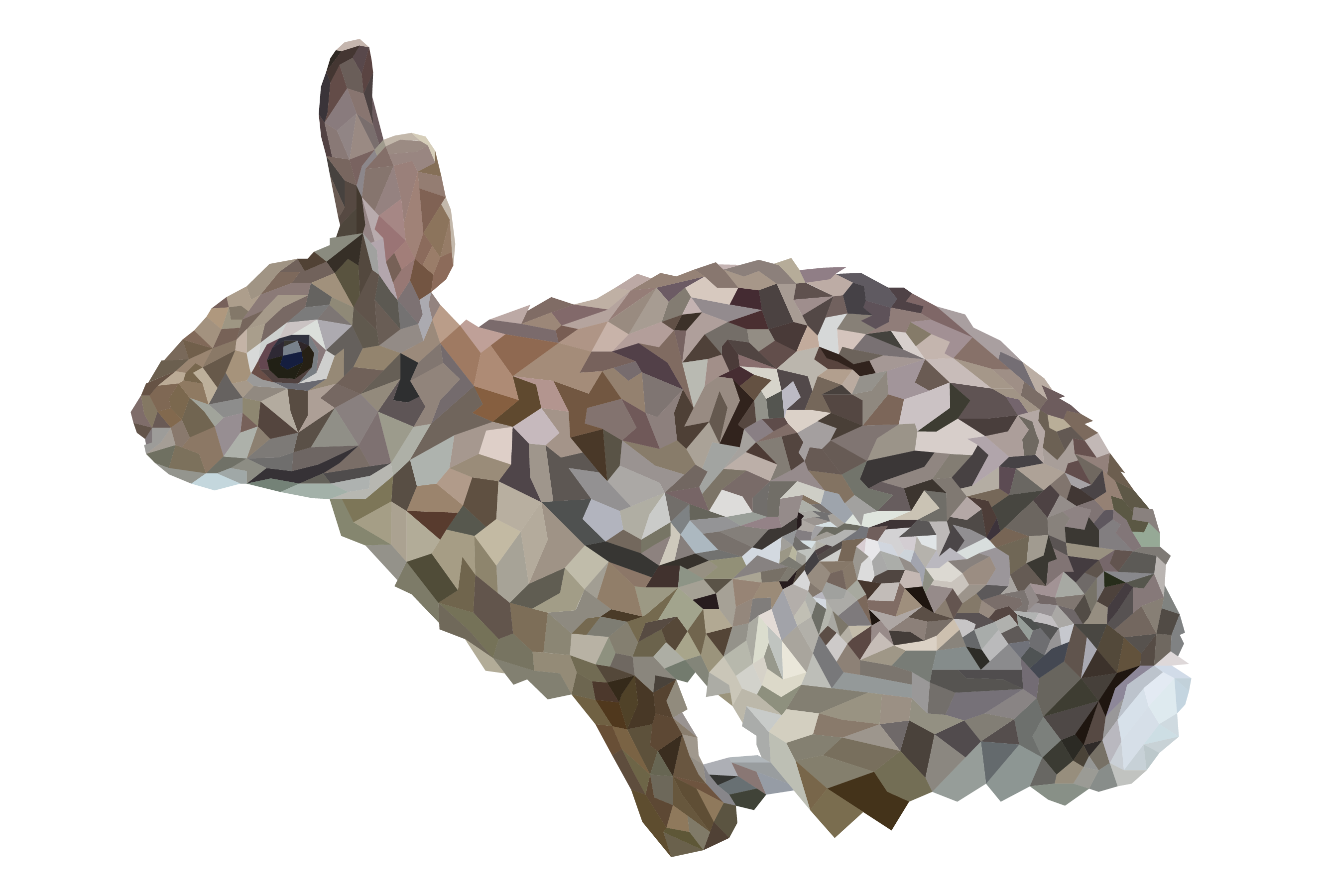
Sylvilagus Floridanus
The Eastern Cottontail is a New World cottontail rabbit and the most common rabbit species in North America. The eastern cottontail can be found in the eastern and south-central United States, southern Canada, eastern Mexico, Central America and northernmost South America. It is abundant in Midwest North America. The essential components of eastern cottontail habitat are an abundance of well-distributed escape cover interspersed with more open foraging areas such as grasslands and pastures. Eastern cottontails forage in open areas and use brush piles, stone walls with shrubs around them, herbaceous and shrubby plants, and burrows or dens for escape cover, shelter, and resting cover. Cottontails do not dig burrows, but rather rest in a form, a shallow, scratched-out depression in a clump of grass or under brush. It may use the dens of groundhogs as a temporary home or during snow.
The eastern cottontail is chunky, red or gray-brown in appearance, with large hind feet, long ears, and a short, fluffy white tail. Its underside fur is white. There is a rusty patch on the tail. Its appearance differs from that of a hare in that it has a brownish-gray coloring around the head and neck. Although they usually spend most of the daylight hours resting in shallow depressions under vegetative cover or other shelter, they can be seen at any time of day. Eastern cottontails are most active when visibility is limited, such as rainy or foggy nights. Eastern cottontails eat vegetation almost exclusively; arthropods have occasionally been found in pellets. Some studies list as many as 70 to 145 plant species in local diets. Food items include bark, twigs, leaves, fruit, buds, flowers, grass seeds, sedge fruits, and rush seeds. The eastern cottontail has to contend with many predators. Major predators include domestic cats and dogs, foxes, coyote, bobcat, weasels, raccoon & great horned owls.