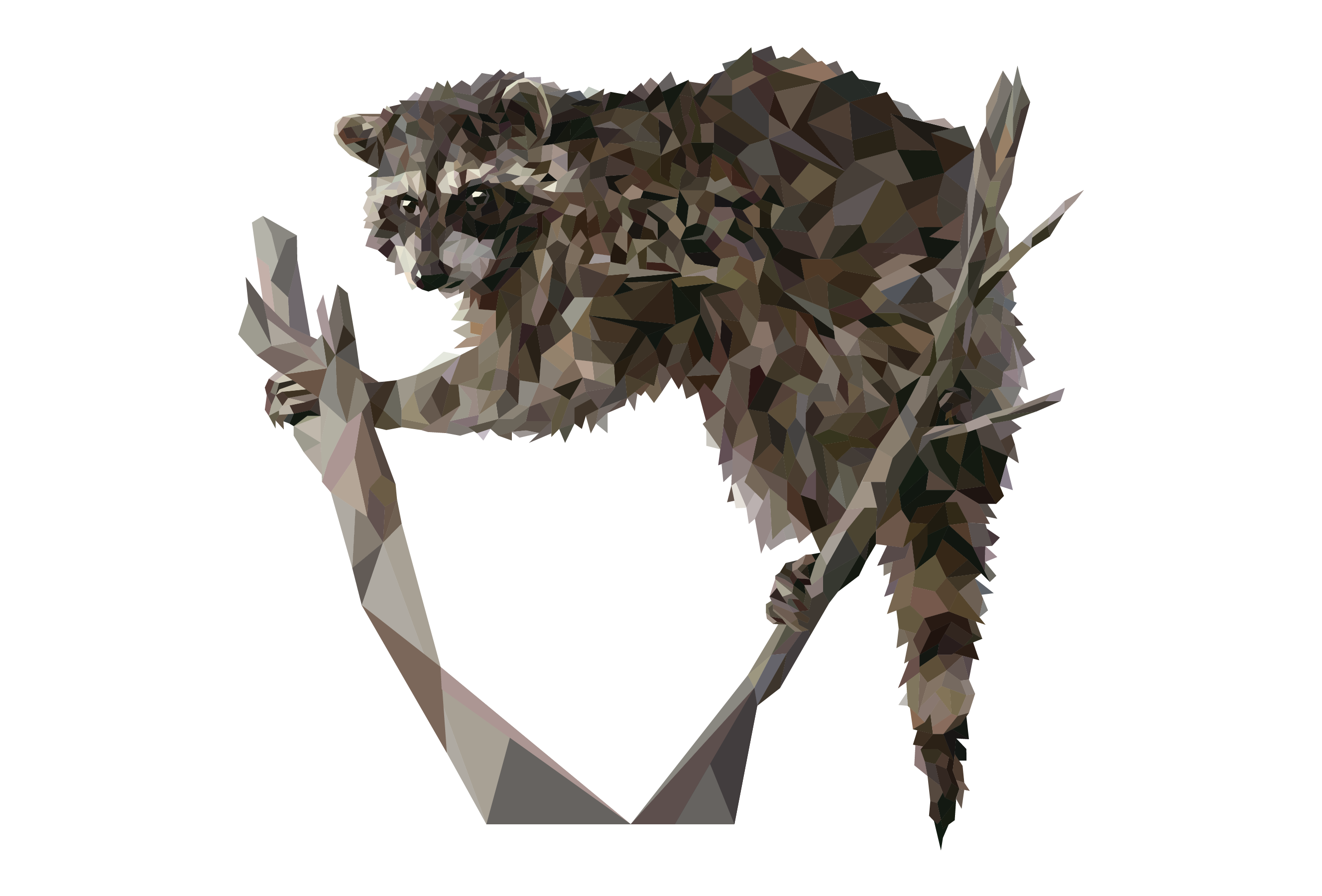
Procyon Lotor
The Raccoon also known as the common raccoon, North American raccoon, northern raccoon, or coon, is a medium-sized mammal native to North America. Although they have thrived in sparsely wooded areas in the last decades, raccoons depend on vertical structures to climb when they feel threatened. Therefore, they avoid open terrain and areas with high concentrations of beech trees, as beech bark is too smooth to climb. Tree hollows in old oaks or other trees and rock crevices are preferred by raccoons as sleeping, winter and litter dens. The original habitats of the raccoon are deciduous and mixed forests, but due to their adaptability they have extended their range to mountainous areas, coastal marshes, and urban areas, where some homeowners consider them to be pests. The raccoon has been able to use urban areas as a habitat. Since the 1950s, raccoons have been present in metropolitan areas like Washington, DC, Chicago, and Toronto. The increasing number of raccoons in urban areas has resulted in diverse reactions in humans, ranging from outrage at their presence to deliberate feeding. Some wildlife experts and most public authorities caution against feeding wild animals because they might become increasingly obtrusive and dependent on humans as a food source.
Its grayish coat mostly consists of dense underfur which insulates it against cold weather. Three of the raccoon’s most distinctive features are its extremely dexterous front paws, its facial mask, and its ringed tail, which are themes in the mythologies of the indigenous peoples of the Americas. Raccoons are noted for their intelligence, with studies showing that they are able to remember the solution to tasks for at least three years. They are usually nocturnal and omnivorous, eating about 40% invertebrates, 33% plants, and 27% vertebrates.