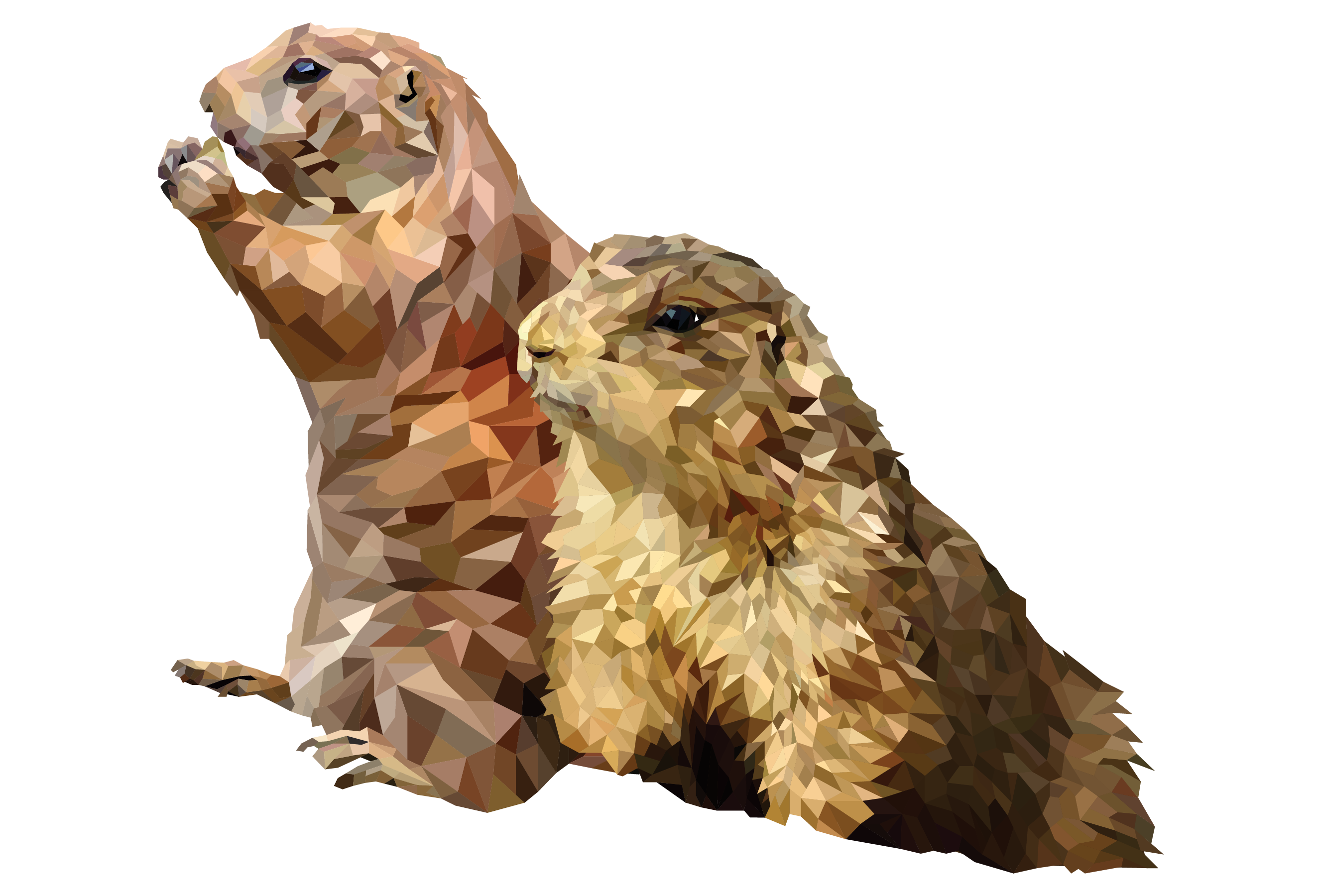
Cynomys Leucurus / Ludovicianus
Prairie Dogs are herbivorous burrowing rodents native to the grasslands of North America. The five species are: black-tailed, white-tailed, Gunnison’s, Utah, and Mexican prairie dogs. They are a type of ground squirrel, found in North America. In Mexico, prairie dogs are found primarily in the northern states, which lie at the southern end of the Great Plains. In the United States, they range primarily to the west of the Mississippi River, though they have also been introduced in a few eastern locales. They are also found in the Canadian Prairies. Despite the name, they are not actually canines!
Prairie dogs live mainly at altitudes ranging from 2,000 to 10,000 ft above sea level. Prairie dog burrows are 16–33 ft long and 6.6–9.8 ft below the ground. The entrance holes have a general diameter of 3.9–11.8 in. Prairie dog burrows can have up to six entrances. Sometimes the entrances are simply flat holes in the ground, while at other times they are surrounded by mounds of soil either left as piles or hard packed. Prairie dog burrows contain chambers to provide certain functions. They have nursery chambers for their young, chambers for night, and chambers for the winter. They also contain air chambers that may function to protect the burrow from flooding and a listening post for predators. Highly social, prairie dogs live in large colonies and collections of prairie dog families that can span hundreds of acres. The prairie dog family groups are the most basic units of its society.
Prairie dogs are chiefly herbivorous, though they eat some insects. They feed primarily on grasses and small seeds. They also will eat roots, seeds, fruit, and buds. They are an important prey species, being the primary diet in prairie species such as the black-footed ferret, red tailed hawk, American badger and coyote. Other species, such as the burrowing owl, also rely on prairie dog burrows for nesting areas.