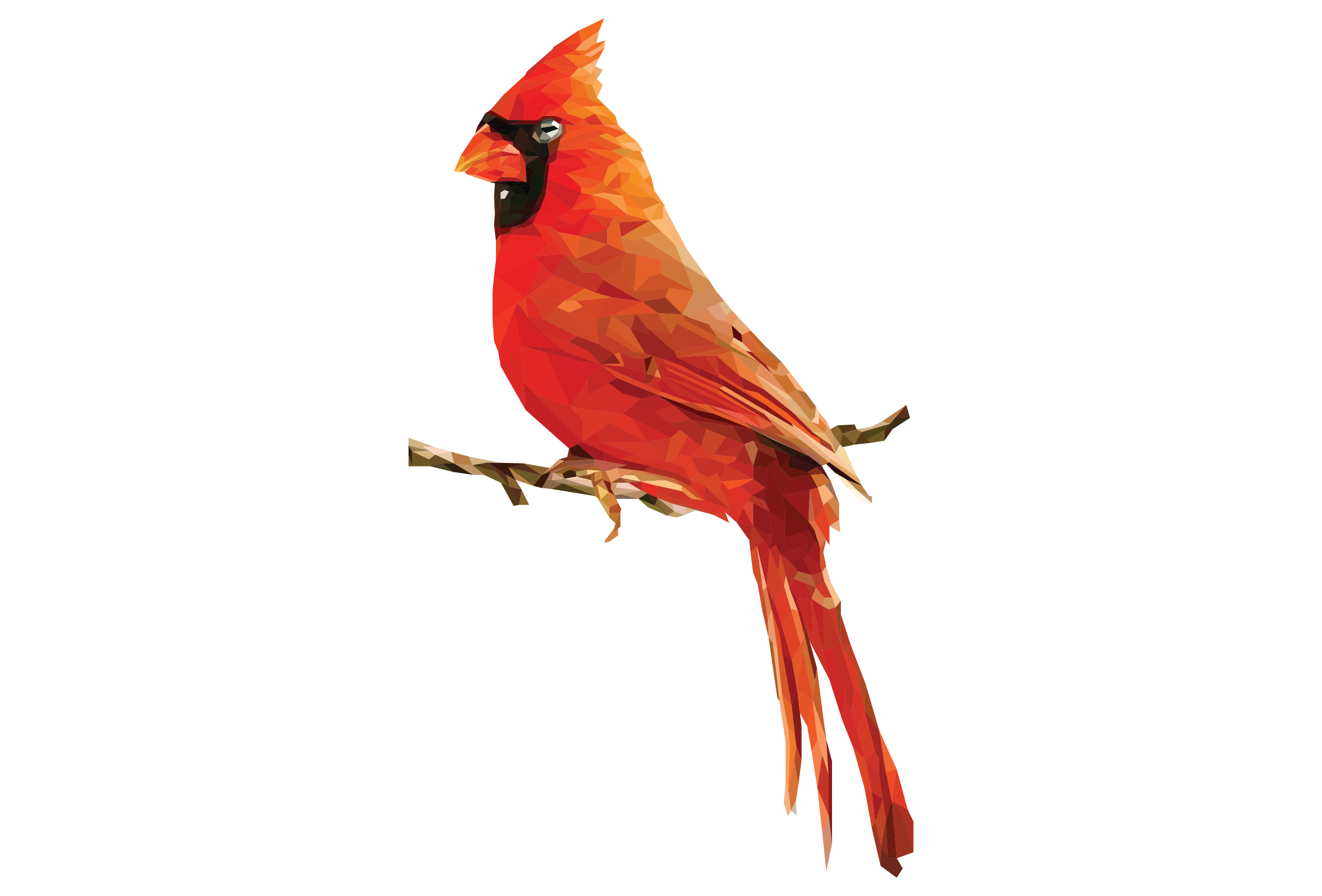
Cardinalis Cardinalis
The Northern Cardinal is also known colloquially as the redbird, common cardinal or just cardinal. It can be found in southeastern Canada, through the eastern United States from Maine to Minnesota to Texas, and south through Mexico, Belize, and Guatemala. Its habitat includes woodlands, gardens, shrublands, and wetlands. The northern cardinal is a mid-sized songbird. It has a distinctive crest on the head and a mask on the face which is black in the male and gray in the female. The male is a vibrant red, while the female is a reddish olive color. The northern cardinal is mainly granivorous, but also feeds on insects and fruit. The adult male is a brilliant crimson red color with a black face mask over the eyes, extending to the upper chest. Both sexes possess prominent raised crests and bright coral-colored beaks. The beak is cone-shaped and strong.
The northern cardinal is a territorial song bird. The male sings in a loud, clear whistle from the top of a tree or another high location to defend his territory. He will chase off other males entering his territory. He may mistake his image on various reflective surfaces as an invading male, and will fight his reflection relentlessly. Mated pairs often travel together. Males sometimes bring nest material to the female, who does most of the building. The nest typically takes three to nine days to build. The nest is made of thin twigs, bark strips, and grasses, lined with grasses or other plant fibers. Eggs are laid one to six days following the completion of the nest. The eggs are white, with a tint of green, blue or brown, and are marked with lavender, gray, or brown blotches which are thicker around the larger end. Northern cardinals are preyed upon by a wide variety of predators native to North America, including falcons, shrikes, bald eagles, golden eagles and several owls. Predators of chicks and eggs include milk snakes, blue jays, eastern gray squirrels, fox squirrels, eastern chipmunks, and domestic cats.