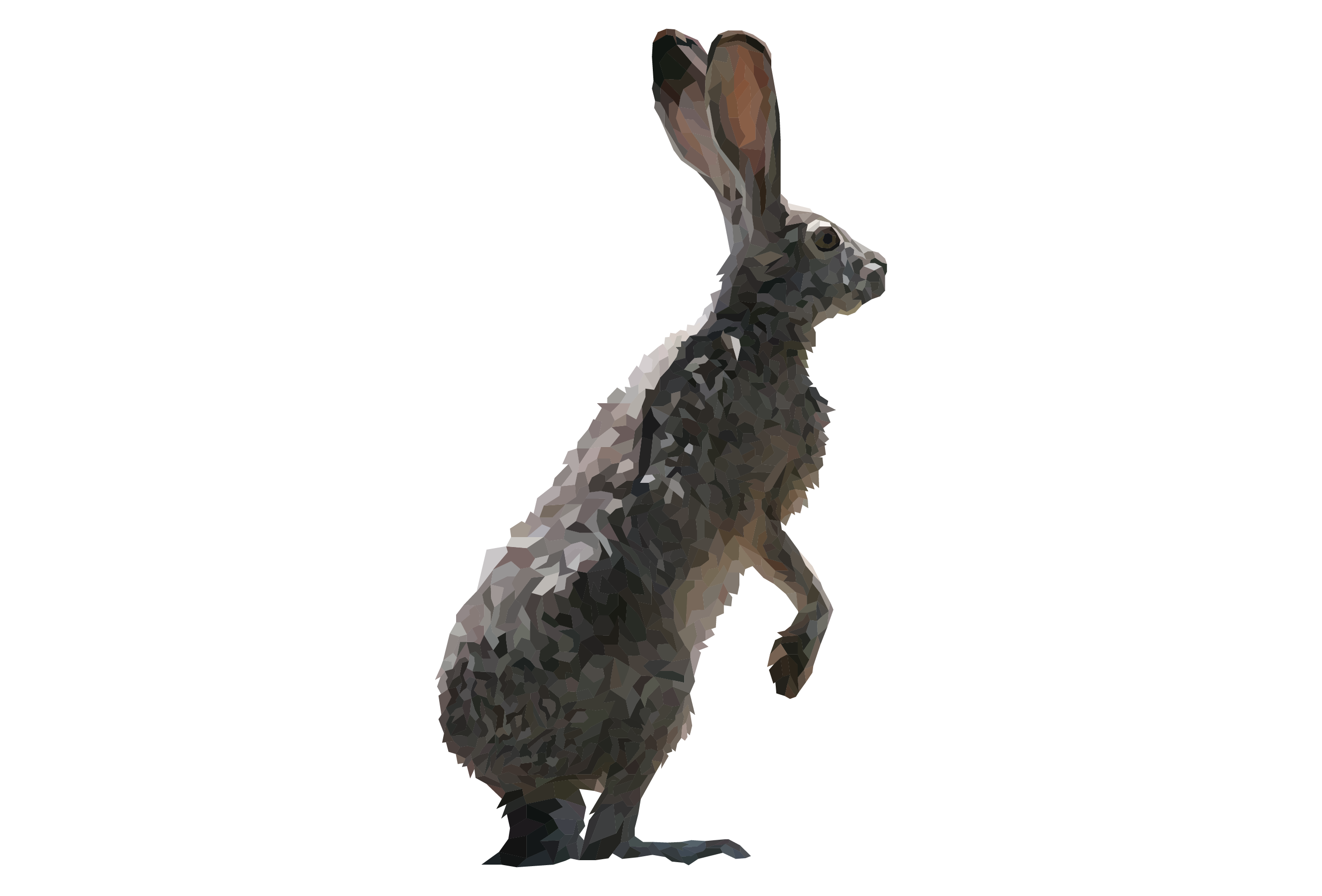
Lepus Californicus
The Black-Tailed Jackrabbit, also known as the American desert hare, is a common hare of the western United States and Mexico, where it is found at elevations from sea level up to 10,000 ft. The black-tailed jackrabbit has distinctive long ears, and the long powerful rear legs characteristic of hares. The black-tailed jackrabbit is the one of the largest North American hares. Their fur is dark buff peppered with black, and its undersides and the insides of its legs are creamy white. The ears are black-tipped on the outer surfaces. The ventral surface of the tail is gray to white, and the black dorsal surface of the tail continues up the spine for a few inches to form a short, black stripe.
Black-tailed jackrabbits occupy mixed shrub-grassland terrains. They can occupy a wide range of habitats as long as diversity in plant species exists. It requires mixed grasses, forbs, and shrubs for food, and shrubs or small trees for cover. The black-tailed jackrabbit diet is composed of shrubs, small trees, grasses, and forbs. Throughout the course of a year, black-tailed jackrabbits feed on most if not all of the important plant species in a community. Their breeding depends on the location; it typically peaks in spring, but may continue all year round in warm climates. Female black-tailed jackrabbits don’t prepare elaborate nests. They give birth in shallow excavations called forms that are no more than a few centimeters deep. Females may line forms with hair prior to giving birth. Young are born fully furred with eyes open, and are mobile within minutes of birth. Females do not protect or even stay with the young except during nursing. Ages of weaning and dispersal are unclear since the young are well camouflaged and rarely observed in the field.