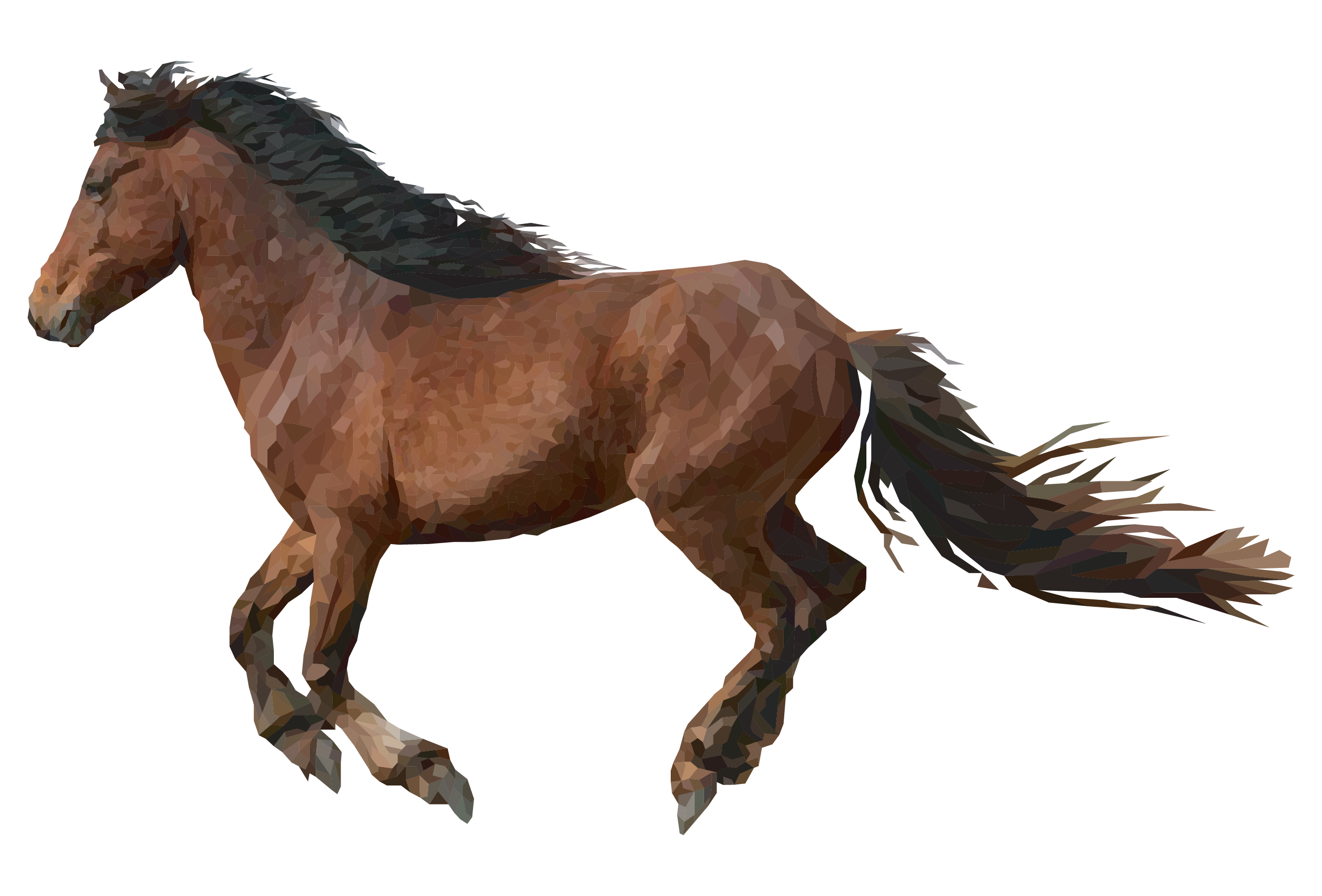
Equus Ferus Caballus
The Mustang is a free-roaming horse of the Western United States, descended from horses brought to the Americas by the Spanish. Mustangs are often referred to as wild horses, but because they are descended from once-domesticated horses, they are actually feral horses. The original mustangs were Colonial Spanish horses, but many other breeds and types of horses contributed to the modern mustang, now resulting in varying phenotypes. More than half of all free-roaming mustangs in North America are found in Nevada, with other significant populations in California, Oregon, Utah, Montana, and Wyoming. Mustangs of all body types are described as surefooted and having good endurance. They may be of any coat color. They exhibit a diverse array of coat colors and distinctive markings, described by a specialized vocabulary. Often, a horse is classified first by its coat color.
Horses are herbivores with a digestive system adapted to a forage diet of grasses and other plant material, consumed steadily throughout the day. Therefore, compared to humans, they have a relatively small stomach but very long intestines to facilitate a steady flow of nutrients. A 990 lb horse will eat 15 to 24 lb of food per day and, under normal use, drink 10 to 12 gal of water. Horses are prey animals with a strong fight-or-flight response. Their first reaction to a threat is to startle and usually flee, although they will stand their ground and defend themselves when flight is impossible or if their young are threatened. They also tend to be curious; when startled, they will often hesitate an instant to ascertain the cause of their fright, and may not flee from something that they perceive as non-threatening. According to the Oxford English Dictionary, the English word “mustang” comes from two essentially synonymous Spanish words, mestengo and mostrenco. Both words referred to horses and cattle defined as “wild having no master”.