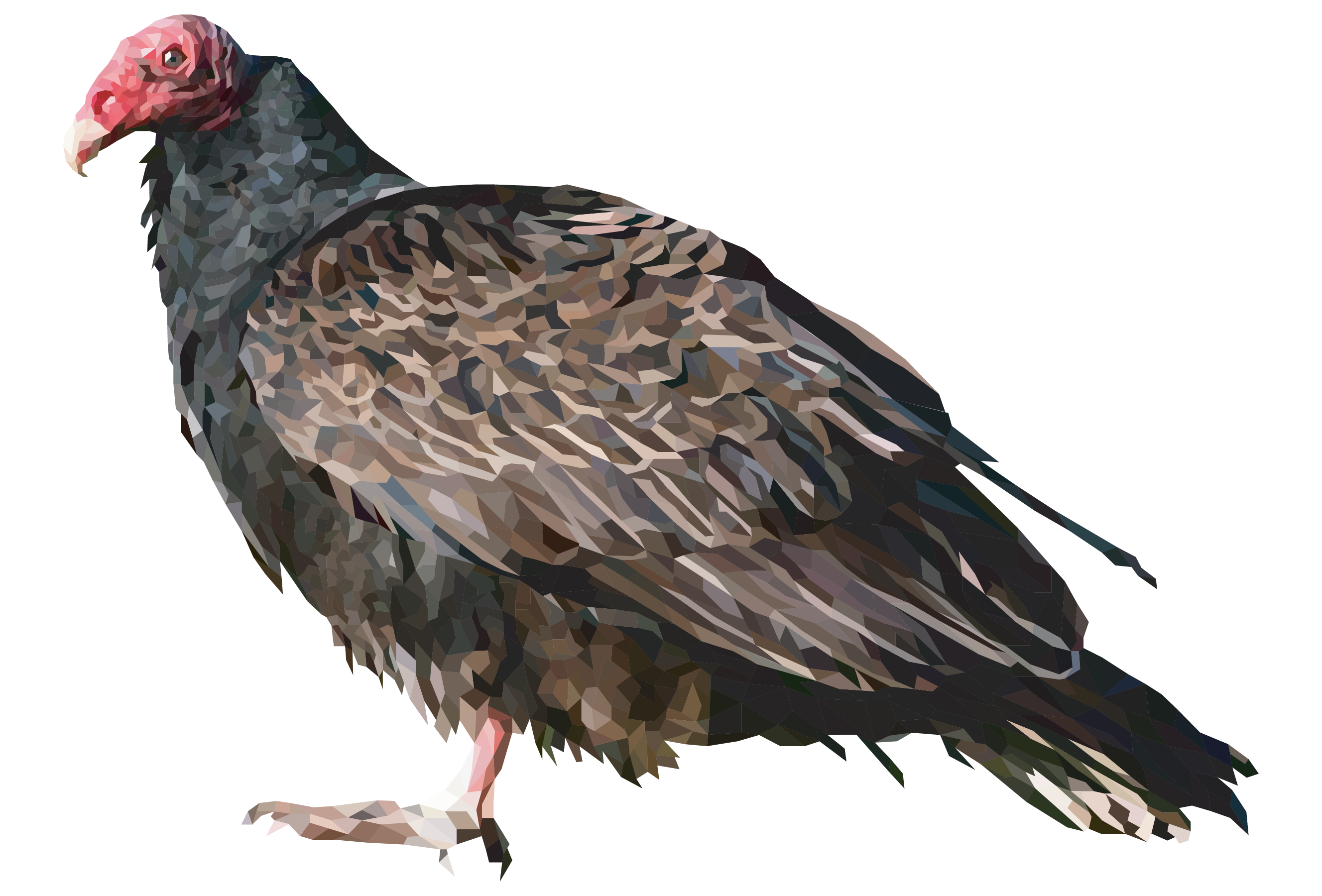
Cathartes Aura
The Turkey Vulture also known in some North American regions as the turkey buzzard, is the most widespread of the New World vultures. The turkey vulture ranges from southern Canada to the southernmost tip of South America. It inhabits a variety of open and semi-open areas, including subtropical forests, shrublands, pastures, and deserts. Like all New World vultures, it is not closely related to the Old World vultures of Europe, Africa, and Asia. The turkey vulture is a scavenger and feeds almost exclusively on carrion. It finds its food using its keen eyes and sense of smell, flying low enough to detect the gasses produced by the beginnings of the process of decay in dead animals. In flight, it uses thermals to move through the air, flapping its wings infrequently. It roosts in large community groups. Lacking a syrinx—the vocal organ of birds—its only vocalizations are grunts or low hisses. It nests in caves, hollow trees, or thickets. It has very few natural predators.
The body feathers are mostly brownish-black, but the flight feathers on the wings appear to be silvery-gray beneath, contrasting with the darker wing linings. The adult’s head is small in proportion to its body and is red in color with few to no feathers. It also has a relatively short, hooked, ivory-colored beak. The irises of the eyes are gray-brown; legs and feet are pink-skinned, although typically stained white. The eye has a single incomplete row of eyelashes on the upper lid and two rows on the lower lid. The turkey vulture is gregarious and roosts in large community groups, breaking away to forage independently during the day. Several hundred vultures may roost communally in groups, which sometimes even include black vultures. It roosts on dead, leafless trees, and will also roost on man-made structures such as water or microwave towers. Its life expectancy in the wild ranges upward of 16 years, with a captive life span of over 30 years being possible.