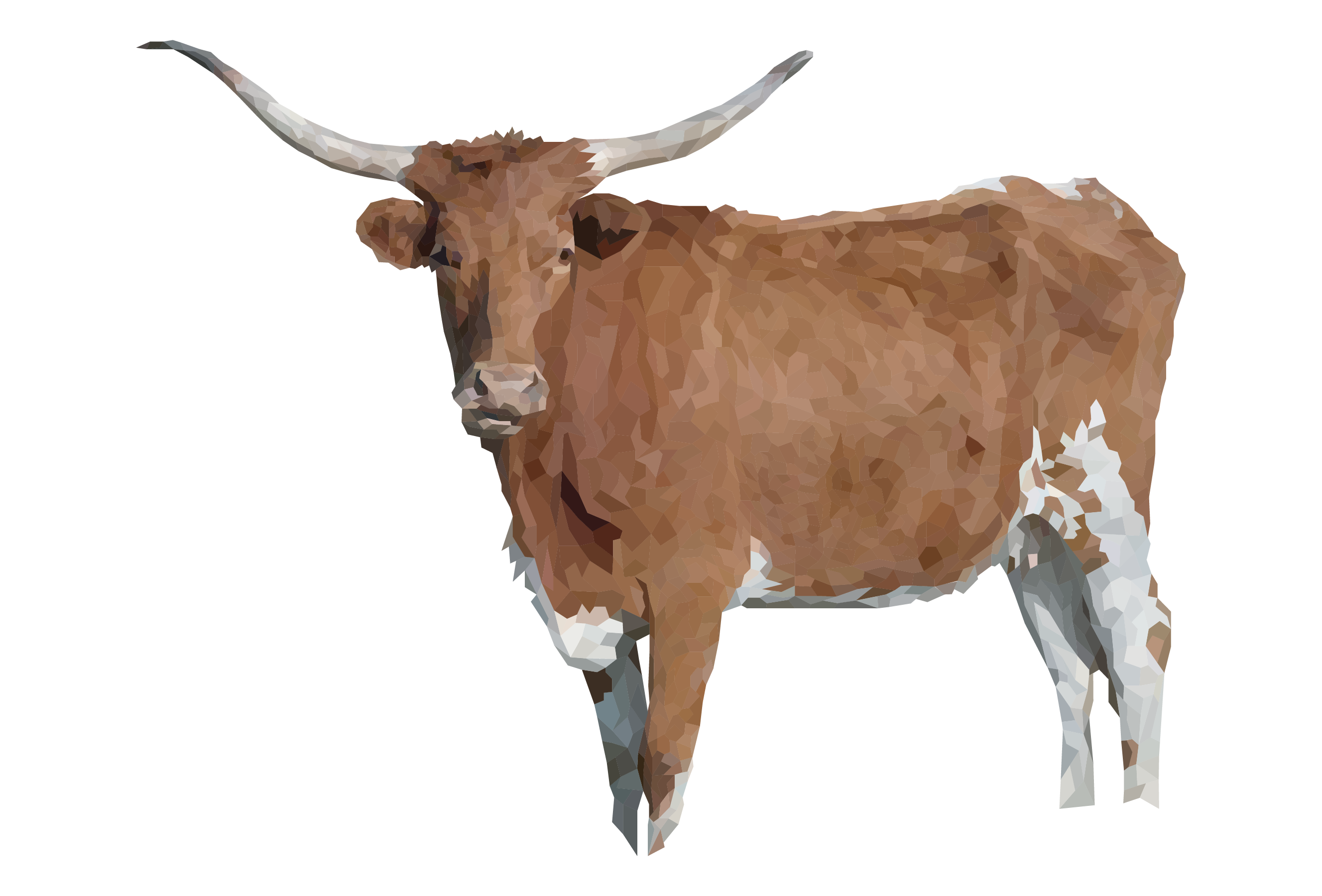
Bos Primigenius
The Texas Longhorn is a breed of cattle known for its characteristic horns, which can extend to over 70 inches tip to tip for bulls, and up to 100 inches tip to tip for steers and exceptional cows. They are descendants of the first cattle introduced in the New World, brought by explorer Christopher Columbus and the Spanish colonists. Descended from cattle that thrived in arid Spain, these cattle have been bred for a high drought-stress tolerance. The Texas Longhorns are direct descendants of the first cattle introduced to the New World. The ancestral cattle were brought by colonizer Christopher Columbus in 1493 to the Caribbean island that would become Hispaniola, to supply food to colonists. Over the next two centuries the Spanish used the cattle in Mexico and gradually moved them north to accompany their settlement. They reached the area that would become known as Texas near the end of the 17th century. The cattle escaped or were turned loose on the open range, where they remained mostly feral for the next two centuries. Over several generations, descendants of these cattle developed to have high feed- and drought-stress tolerance, and other “hardy” characteristics that have gained Longhorns their high reputation as livestock.
Longhorns are the most spectacularly colored of all cattle, with shadings and combinations so varied that no two are alike, they reach maximum weight in eight or ten years and range from 800 to 1500 pounds. Due to their innate gentle disposition and intelligence, Texas Longhorns are increasingly being trained for steer riding, including being used in parades. Texas Longhorn cattle eat a wider range of grasses, plants, and weeds than do most other cattle. Texas Longhorn owners are able to use pastures that require less fertilizer and weed killers than owners of other breeds of cattle.