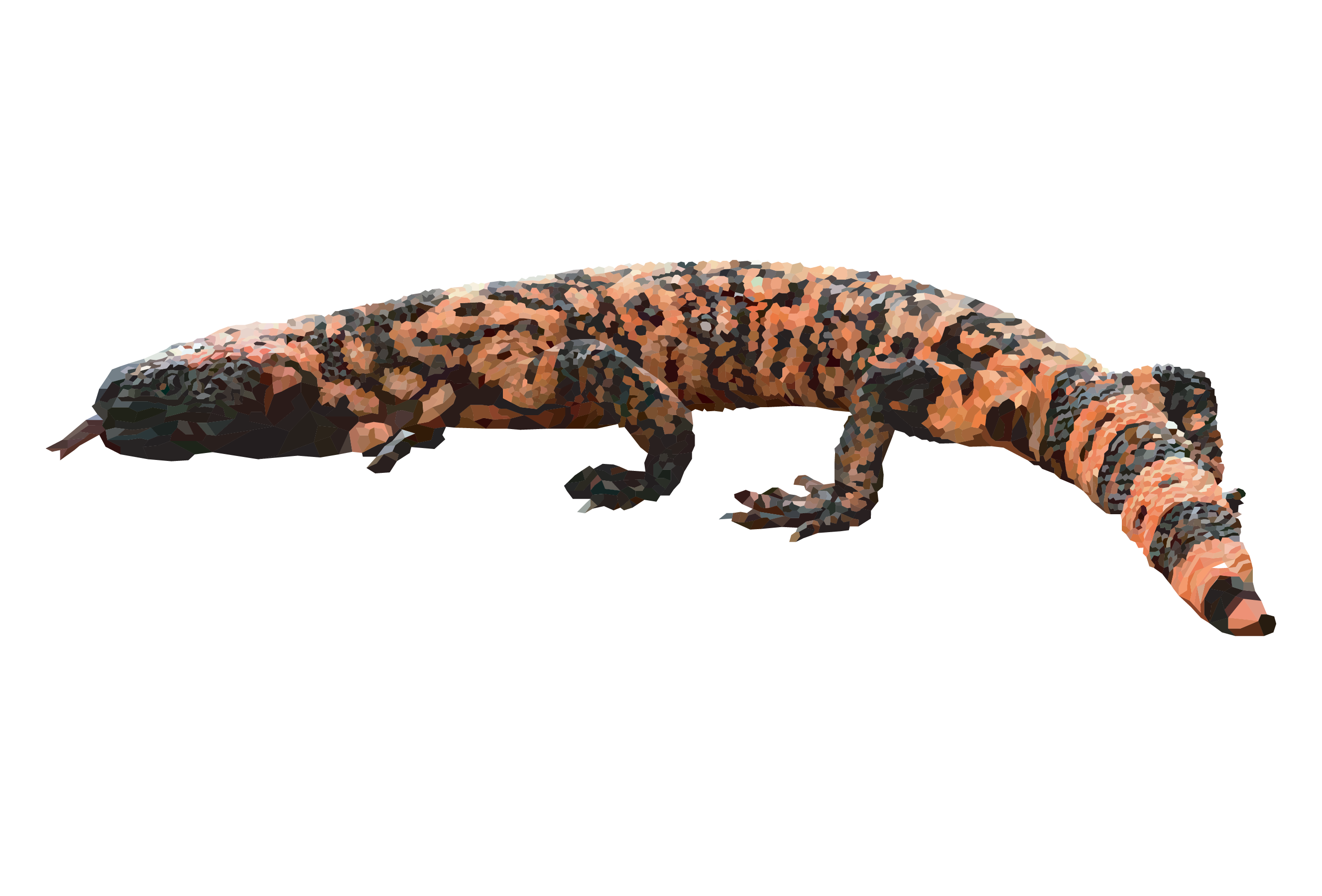
Heloderma Suspectum
The Gila Monster, is a species of venomous lizard native to the southwestern United States and northwestern Mexican state of Sonora. A heavy, typically slow-moving lizard, the Gila monster is the only venomous lizard native to the United States and one of only two known species of venomous lizards in North America, the other being its close relative, the Mexican beaded lizard. The name “Gila” refers to the Gila River Basin in the U.S. states of New Mexico and Arizona, where the Gila monster was once plentiful. Gila monsters spend 90% of their time underground in burrows or rocky shelters. They are active in the morning during the dry season; later in the summer, they may be active on warm nights or after a thunderstorm. The Gila monster has rounded beadlike bony deposits on the back of its head, limbs, body, and tail, a distinctive color pattern of black bands on a pale yellow or orange background on the body and tail. It has a massive skull, venom glands in the lower jaw, and a dark, forked tongue.
The Gila monster eats small birds, small mammals, frogs, smaller lizards, insects, and carrion. It uses its extremely acute sense of smell to locate prey, especially eggs. Its sense of smell is so keen, it can locate and dig up chicken eggs buried 6 in deept. Prey may be crushed to death if large or eaten alive if small, swallowed head-first, and helped down by muscular contractions and neck flexing. Gila monsters are able to climb trees and cacti in search of eggs. They are preyed upon by coyotes and raptors. Although the Gila monster is venomous, its sluggish nature means it represents little threat to humans. However, it has acquired a fearsome reputation, and is sometimes killed despite being protected by state law in Arizona. Urban sprawl and habitat destruction have adversely affected Gila monster numbers. In 1952, they became the first venomous animal to be given legal protection. Gila monsters are listed as Near Threatened by the IUCN. The Gila monster may live up to 20 years in the wild, or 30 in captivity.