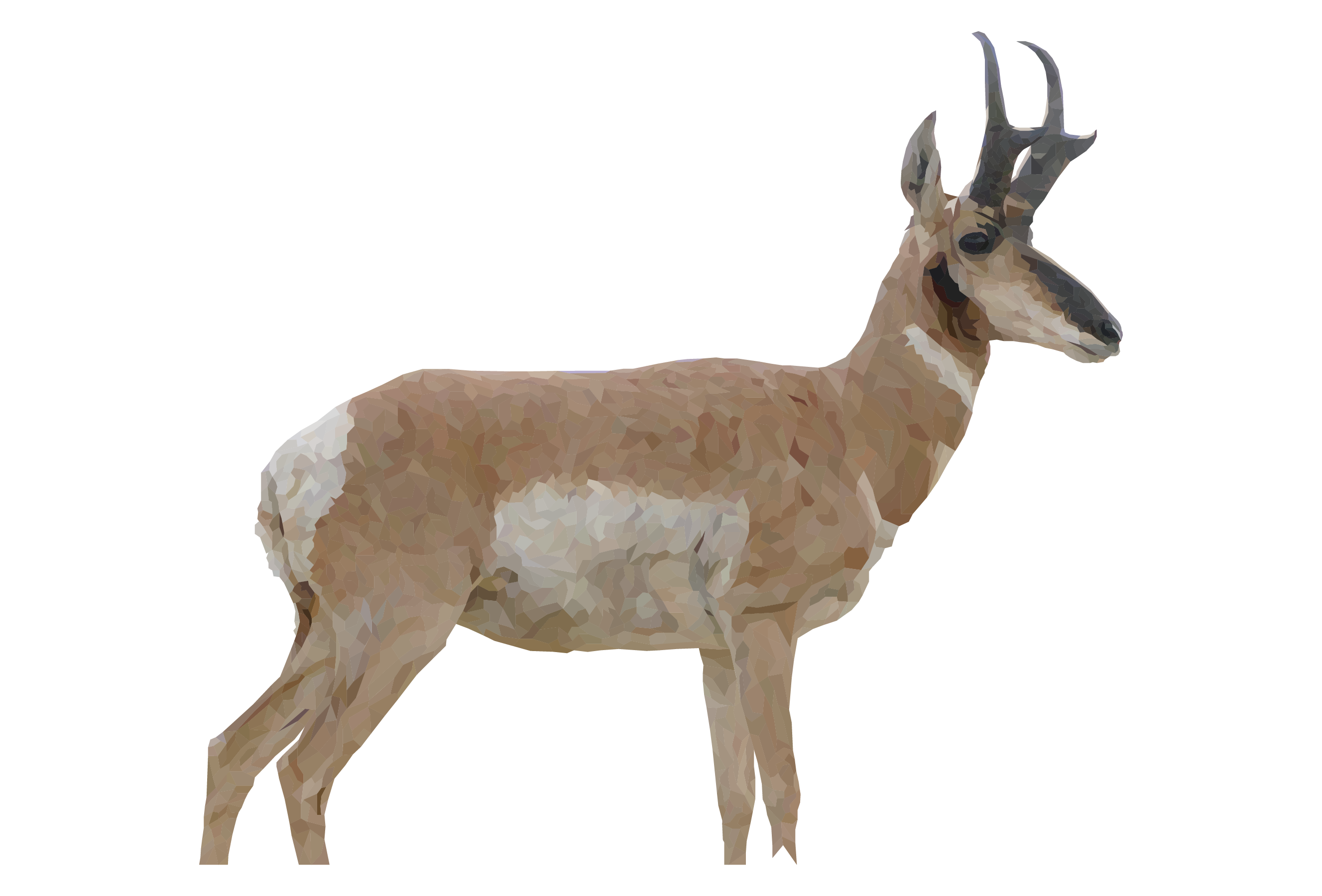
Antilocapra Americana
The Pronghorn is a mammal indigenous to interior western and central North America. Though not an antelope, it is often known colloquially in North America as the American antelope, prong buck, pronghorn antelope, prairie antelope, or simply antelope because it closely resembles the true antelopes of the Old World and fills a similar ecological niche due to parallel evolution. It is the only surviving member of the family Antilocapridae. Pronghorns have distinct white fur on their rumps, sides, breasts, bellies, and across their throats. The feet have two hooves, with no dewclaws. Each horn of the pronghorn is composed of a slender, laterally flattened blade of bone that grows from the frontal bones of the skull, forming a permanent core. They also have very large eyes with a 320° field of vision. Unlike deer, pronghorns possess a gallbladder.
The pronghorn is the fastest land mammal in the Western Hemisphere, being built for maximum predator evasion through running. The top speed is very hard to measure accurately and varies between individuals; it can run 35 mph for 4 mi, 42 mph for 1 mi and 55 mph for 0.5 mi. Compared to its body size, the pronghorn has a large windpipe, heart, and lungs to allow it to take in large amounts of air when running. Additionally, pronghorn hooves have two long, cushioned, pointed toes which help absorb shock when running at high speeds. They also have an extremely light bone structure and hollow hair. Pronghorns prefer open, expansive terrain with the densest populations in areas receiving around 9.8–15.7 in of rainfall per year. They eat a wide variety of plant foods, often including plants unpalatable or toxic to domestic livestock, though they also compete with them for food. Cougars, wolves, coyotes, and bobcats are major predators of pronghorns. Golden eagles have been reported to prey on fawns and adults.