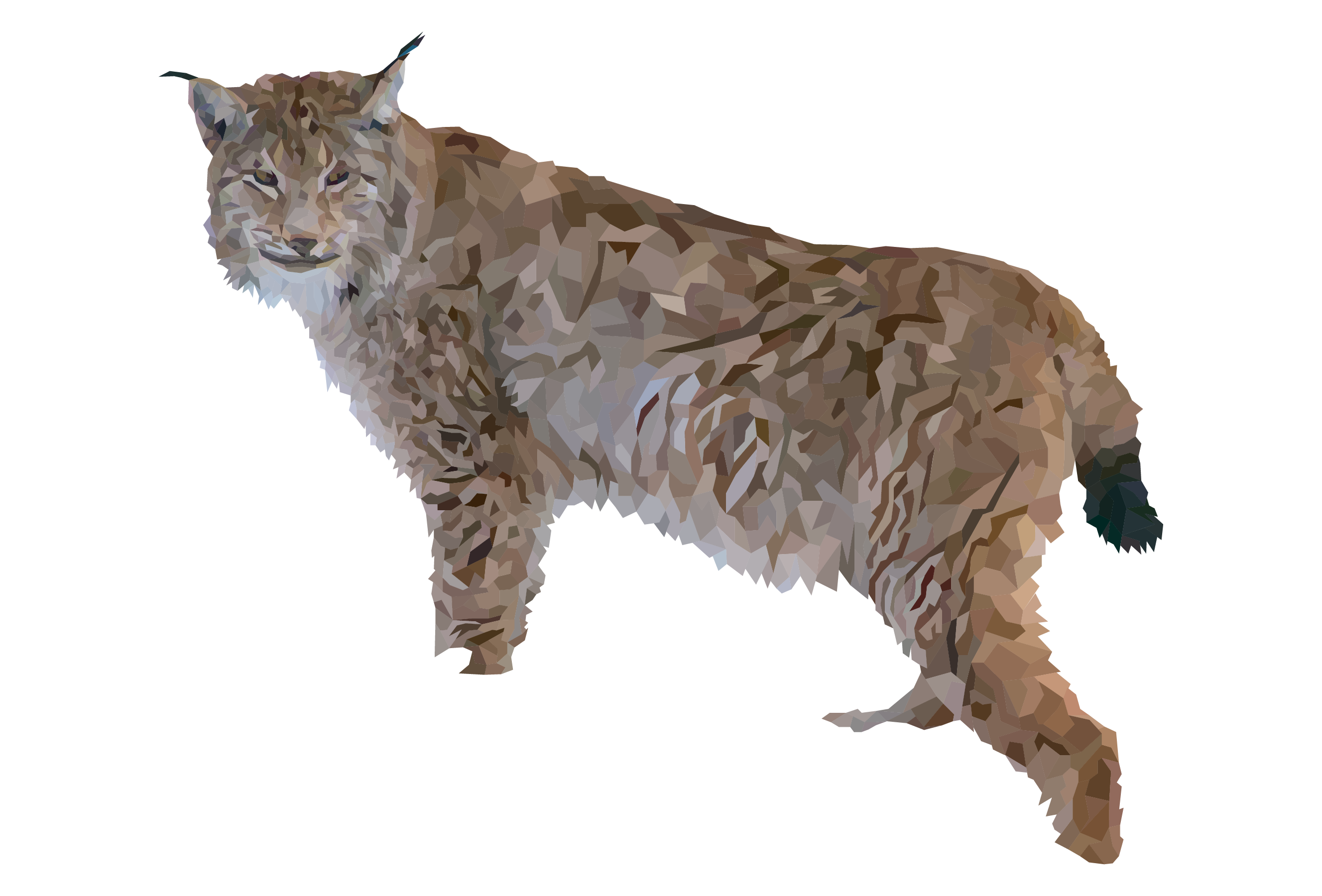
Lynx Rufus
The Bobcat is a medium-sized North American cat that first appeared during the Irvingtonian stage around 1.8 million years ago. Containing two recognized subspecies, it ranges from southern Canada to central Mexico, including most of the contiguous United States. The bobcat is an adaptable predator that inhabits wooded areas, as well as semidesert, urban edge, forest edge, and swampland environments. It remains in some of its original range, but populations are vulnerable to local extinction by coyotes and domestic animals. With a gray to brown coat, whiskered face, and black-tufted ears, the bobcat resembles the other species of the midsized genus Lynx. It is smaller on average than the Canada lynx, with which it shares parts of its range, but is about twice as large as the domestic cat. It has distinctive black bars on its forelegs and a black-tipped, stubby or “bobbed” tail.
The bobcat is able to survive for long periods without food, but eats heavily when prey is abundant. During lean periods, it often preys on larger animals, which it can kill and return to feed on later. The bobcat hunts by stalking its prey and then ambushing with a short chase or pounce. The bobcat prefers rabbits and hares, it hunts insects, chickens, geese and other birds, small rodents, and deer. Prey selection depends on location and habitat, season, and abundance. Like most cats, the bobcat is territorial and largely solitary. It uses several methods to mark its territorial boundaries, including claw marks and deposits of urine or feces. Although bobcats have been hunted extensively by humans, both for sport and fur, their population has proven resilient though declining in some areas. The average bobcat lifespan is 7 years long and rarely exceeds 10 years. The oldest wild bobcat on record was 16 years old, and the oldest captive bobcat lived to be 32.