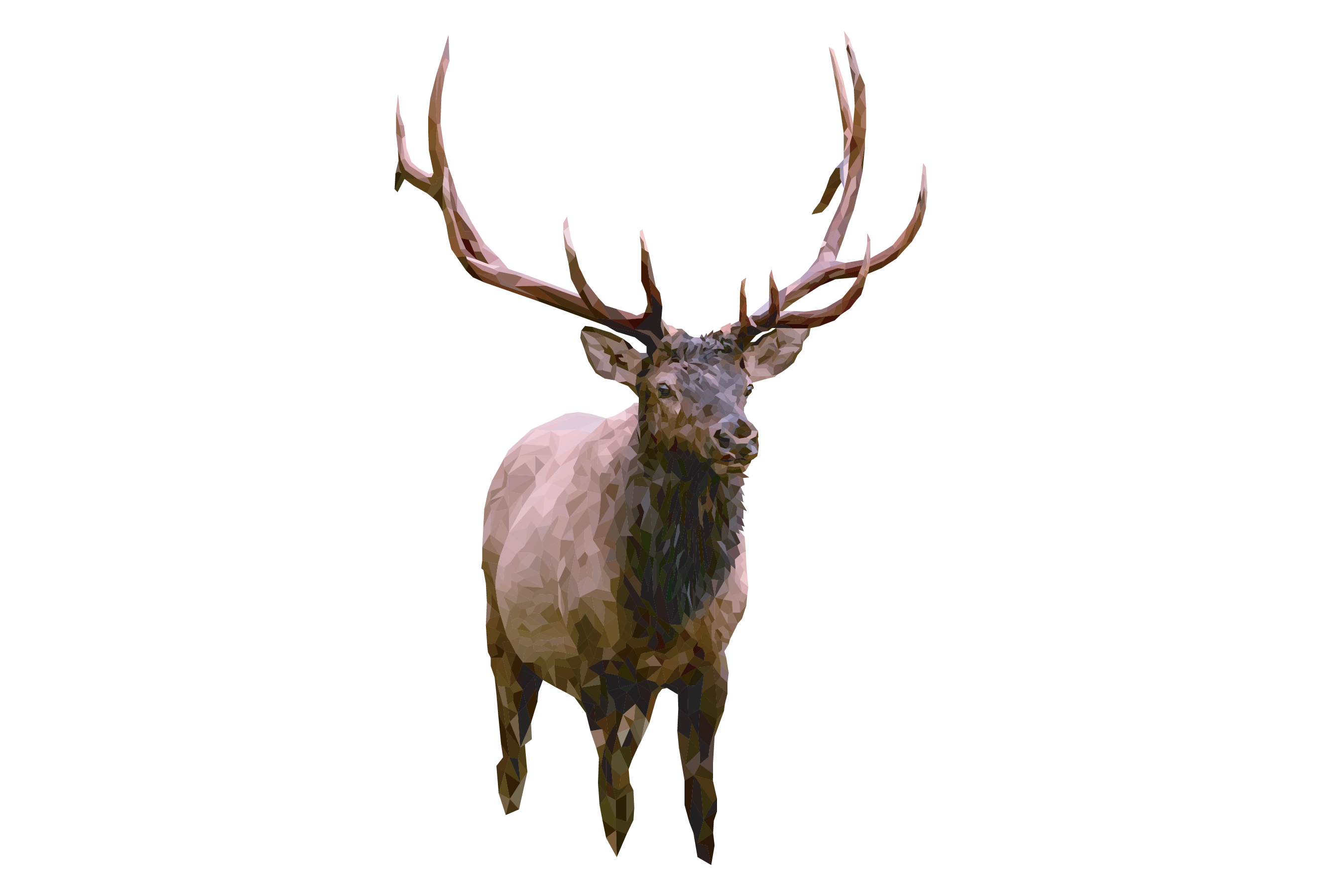
Cervus Canadensis
The Elk, or wapiti is one of the largest species within the deer family, Cervidae, and one of the largest terrestrial mammals in North America. This animal should not be confused with the still larger moose of North America. Elk range in forest and forest-edge habitat. The elk is a large animal of the ungulate order Artiodactyla, possessing an even number of toes on each foot, similar to those of camels, goats and cattle. Elk have a four-chambered stomach, and feeds on grasses, plants, leaves and bark. During the summer, elk eat almost constantly, consuming between 8.8-15.4 lb of vegetation daily. In North America, males are called bulls, and females are called cows. Elk are more than twice as heavy as mule deer and have a more reddish hue to their hair coloring, as well as large, buff-colored rump patches and smaller tails. Moose are larger and darker than elk; bulls have distinctively different antlers. Elk gather in herds, while moose are solitary. Male elk have large antlers which are shed each year. Males also engage in ritualized mating behaviors during the rut, including posturing, antler wrestling, and bugling, a loud series of vocalizations that establishes dominance over other males and attracts females.
Bulls have a loud vocalization consisting of screams known as bugling, which can be heard for miles. Bugling is often associated with an adaptation to open environments such as parklands, meadows, and savannas, where sound can travel great distances. Females are attracted to the males that bugle more often and have the loudest call. Bugling is most common early and late in the day and is one of the most distinctive sounds in nature, akin to the howl of the gray wolf. In North America, wolf and coyote packs and the solitary cougar are the most likely predators, although brown and black bears also prey on elk. Coyote packs mostly prey on elk calves. Elk have played an important role in the cultural history of a number of peoples. Pictograms and petroglyphs of elk were carved into cliffs thousands of years ago.