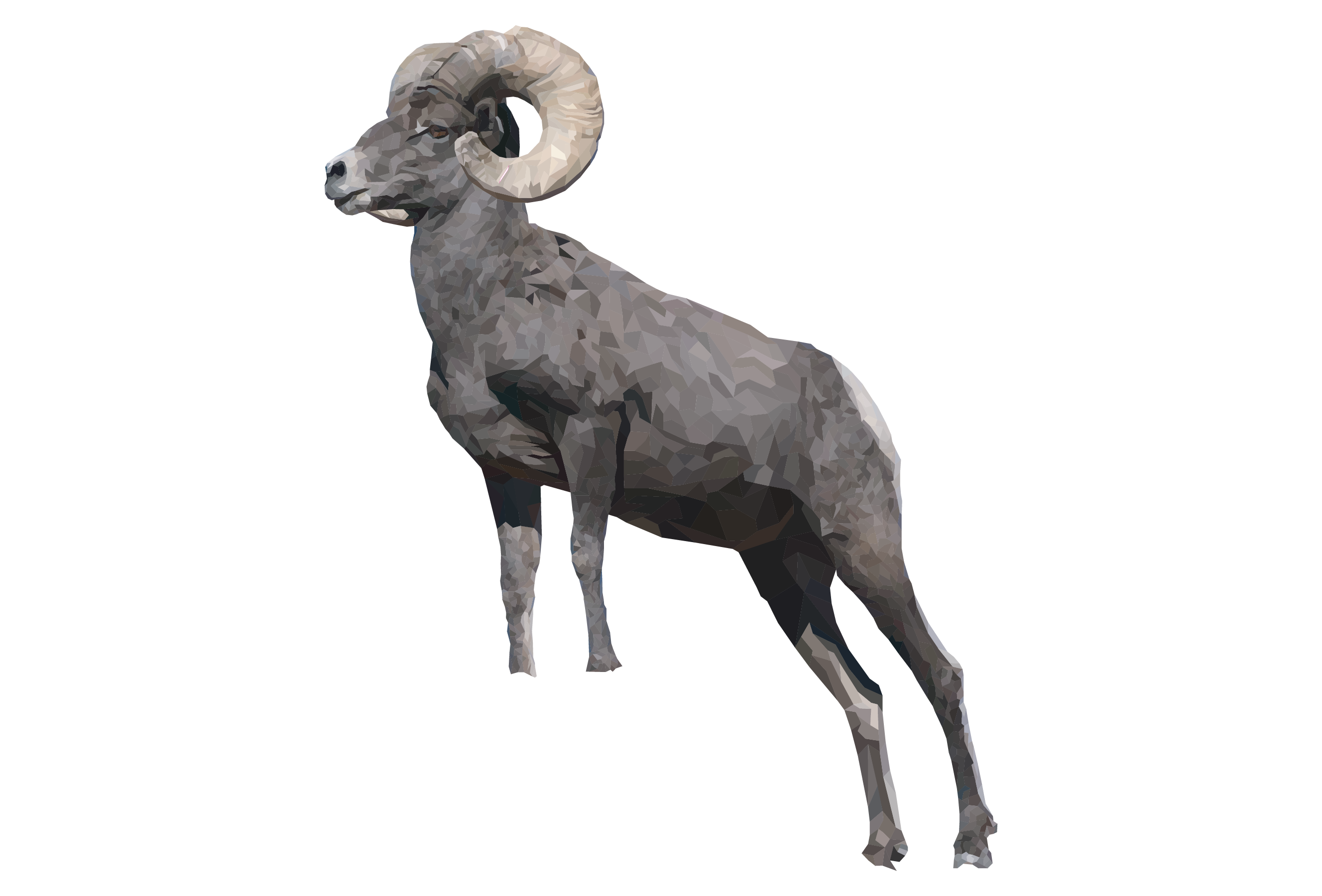
Ovis Canadensis
The Bighorn Sheep is a species of sheep native to North America. The species is named for its large horns. A pair of horns might weigh up to 30 lb; the sheep weigh up to 300 lb. Sheep originally crossed to North America over the Bering Land Bridge from Siberia; the population in North America peaked in the millions. Bighorn sheep generally inhabit alpine meadows, grassy mountain slopes, and foothill country near rugged, rocky cliffs and bluffs. Since bighorn sheep cannot move through deep snow, they prefer drier slopes, where the annual snowfall is less than about 60 in per year. A bighorn’s winter range usually lies at lower elevations than its summer range. By 1900, the population had crashed to several thousand, due to diseases introduced through European livestock and over-hunting.
Bighorn sheep are named for the large, curved horns borne by the rams (males). Ewes (females) also have horns, but they are shorter with less curvature. They range in color from light brown to grayish or dark, chocolate brown, with a white rump and lining on the backs of all four legs. Male bighorn sheep have large horn cores, enlarged cornual and frontal sinuses, and internal bony septa. These adaptations serve to protect the brain by absorbing the impact of clashes. Bighorn sheep graze on grasses and browse shrubs, particularly in fall and winter, and seek minerals at natural salt licks. Females tend to forage and walk, possibly to avoid predators and protect lambs, while males tend to eat and then rest and ruminate, which lends to more effective digestion and greater increase in body size. Bighorn sheep of all ages are threatened by bears, wolves, and especially cougars, which are perhaps best equipped with the agility to prey on them in uneven, rocky habitats. Rams typically live 9-12 years, while ewes usually live 10-14 years.