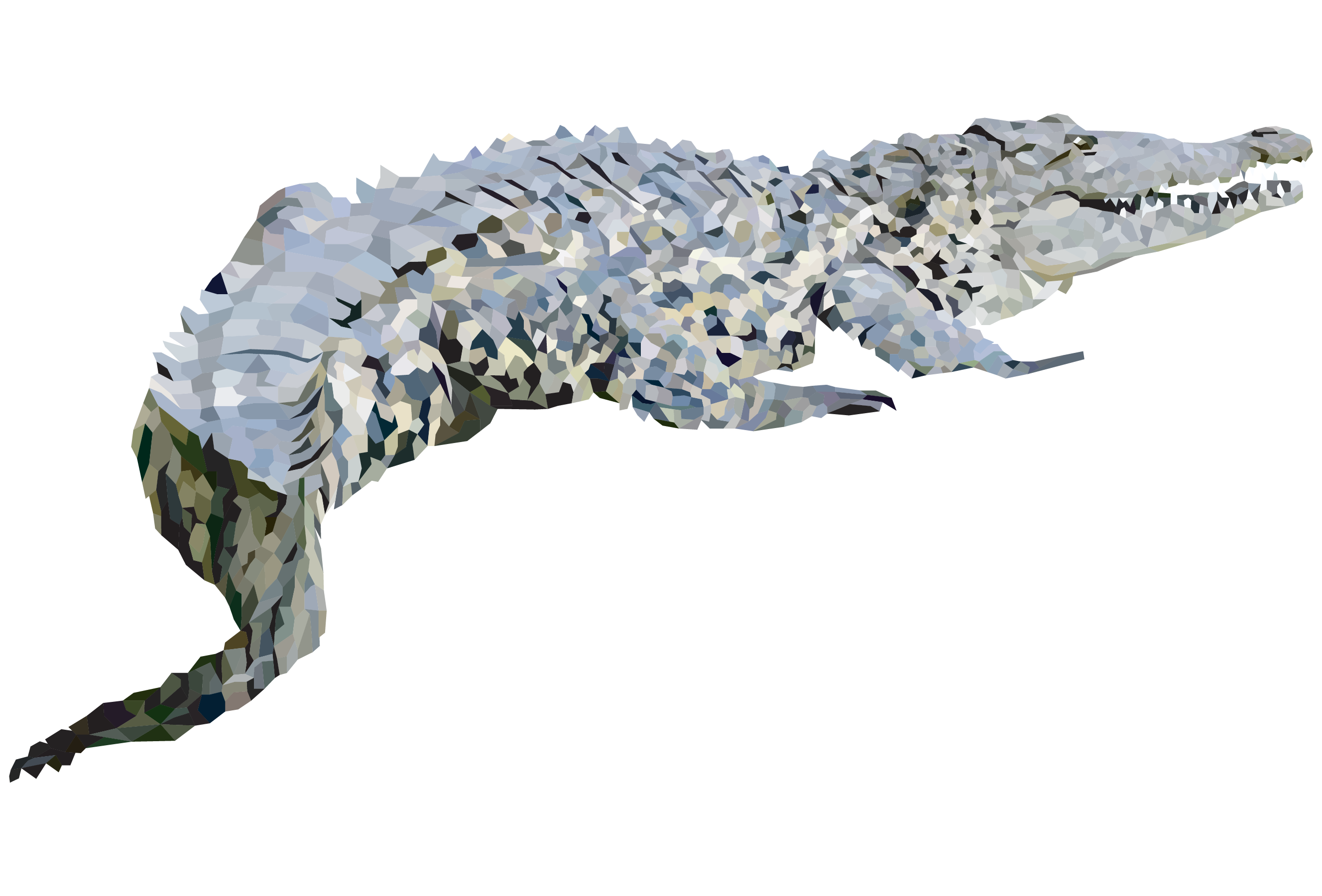
Crocodylus Acutus
The American Crocodile is a species of crocodilian found in the Neotropics. It is the most widespread of the four extant species of crocodiles from the Americas, with populations present from South Florida and the coasts of Mexico to as far south as Peru and Venezuela. The habitat of the American crocodile consists largely of coastal areas. It is also found in river systems, but tends to prefer salinity, resulting in the species congregating in brackish lakes, mangrove swamps, lagoons, cays, and small islands. Other crocodiles also have tolerance to saltwater due to salt glands underneath the tongue, but the American crocodile is the only species other than the saltwater crocodile to commonly live and thrive in saltwater. They can be found on beaches and small island formations without any freshwater source, such as some of the many cays and islets across the Bahamas and the Caribbean. The American is one of the larger crocodile species.
Like all true crocodilians, the American crocodile is a quadruped, with four short, stocky legs; a long, powerful tail; and a scaly hide with rows of ossified scutes running down its back and tail. Its snout is elongated and includes a strong pair of jaws. Its eyes have nictitating membranes for protection, along with lacrimal glands, which produce tears. The nostrils, eyes, and ears are situated on the top of its head, so the rest of the body can be concealed underwater for surprise attacks. Camouflage also helps it prey on food. This crocodile species normally crawls on its belly, but it can also “high walk”. Larger specimens can charge up to nearly 10 mph. They can swim at as much as 20 mph by moving their bodies and tails in a sinuous fashion, but they cannot sustain this speed. Adults have a uniform grayish-green coloration with white or yellow undersides, while juveniles have dark cross-banding on the tail and back. American crocodiles are apex predators, and any aquatic or terrestrial animal they encounter in freshwater, riparian and coastal saltwater habitats is potential prey.