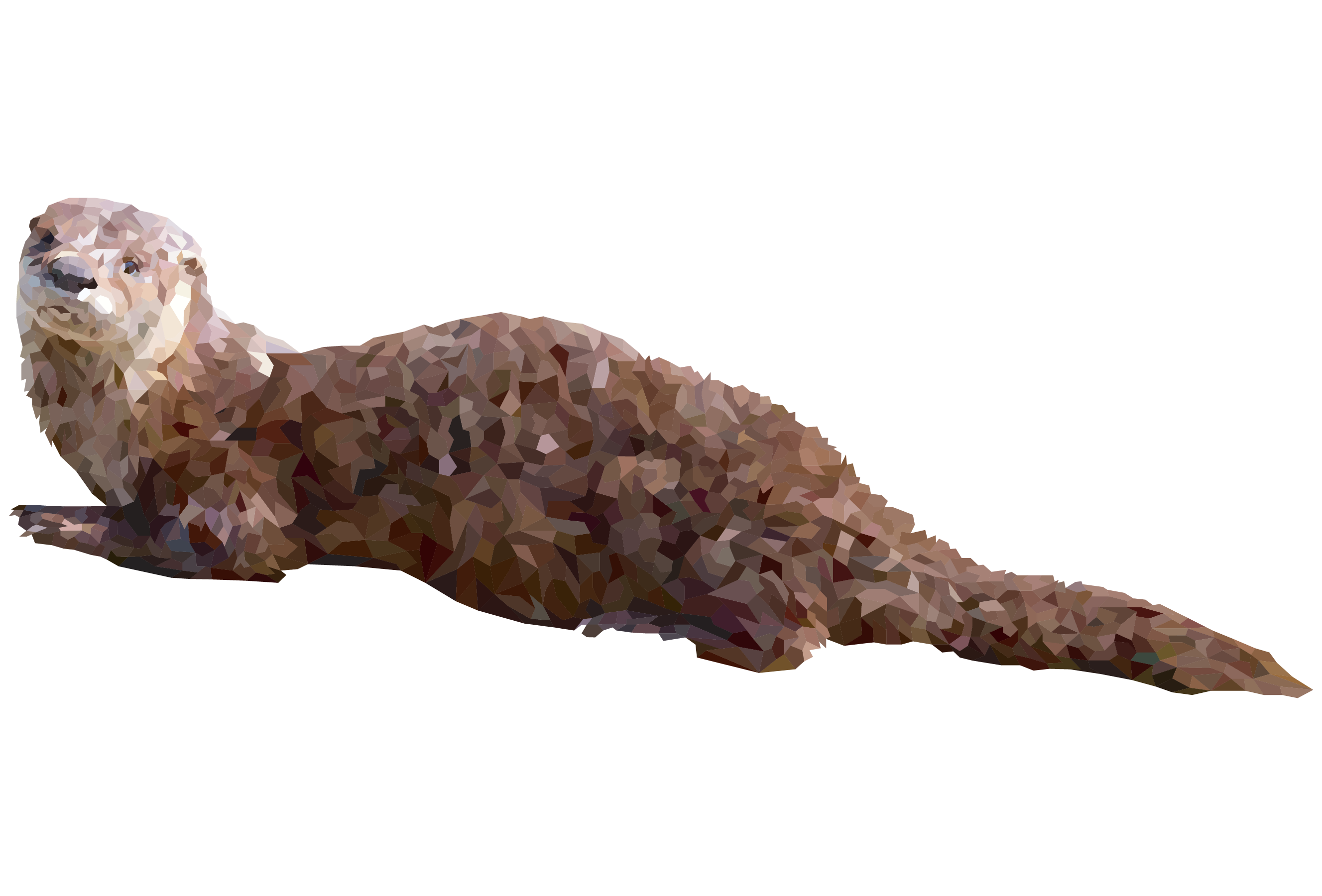
Lontra Canadensis
The North American River Otter, also known as the northern river otter or the common otter, is a semiaquatic mammal endemic to the North American continent found in and along its waterways and coasts. The North American river otter, a member of the subfamily Lutrinae in the weasel family, is equally versatile in the water and on land. The river otter is protected and insulated by a thick, water-repellent coat of fur. The North American river otter is a stocky animal with short legs, a muscular neck no smaller than the head, and an elongated body that is broadest at the hips. The North American river otter is physically well-equipped for aquatic life. The ears are short, the neck is the same diameter as the head, the legs are short and powerful, the toes are fully webbed, and the tail is tapered. It establishes a burrow close to the water’s edge in river, lake, swamp, coastal shoreline, tidal flat, or estuary ecosystems. The den typically has many tunnel openings, one of which generally allows the otter to enter and exit the body of water. Female North American river otters give birth in these burrows, producing litters of one to six young.
North American river otters, like most predators, prey upon the most readily accessible species. Fish is a favored food among the otters, but they also consume various amphibians such as salamanders and frogs, freshwater clams, mussels, snails, small turtles and crayfish. The most common fish consumed are perch, suckers, and catfish. The right lung of the North American river otter is larger than the left, having four lobes compared with two for the left. Reduced lobulation of the lungs is presumed to be adaptive for underwater swimming. On land, the North American river otter can walk, run, bound, or slide. North American river otters are highly mobile and have the capacity of traveling up to 26 mi in one day. North American river otters live an average of 21 years of age in captivity. In the wild, they normally live about 8 to 9 years.