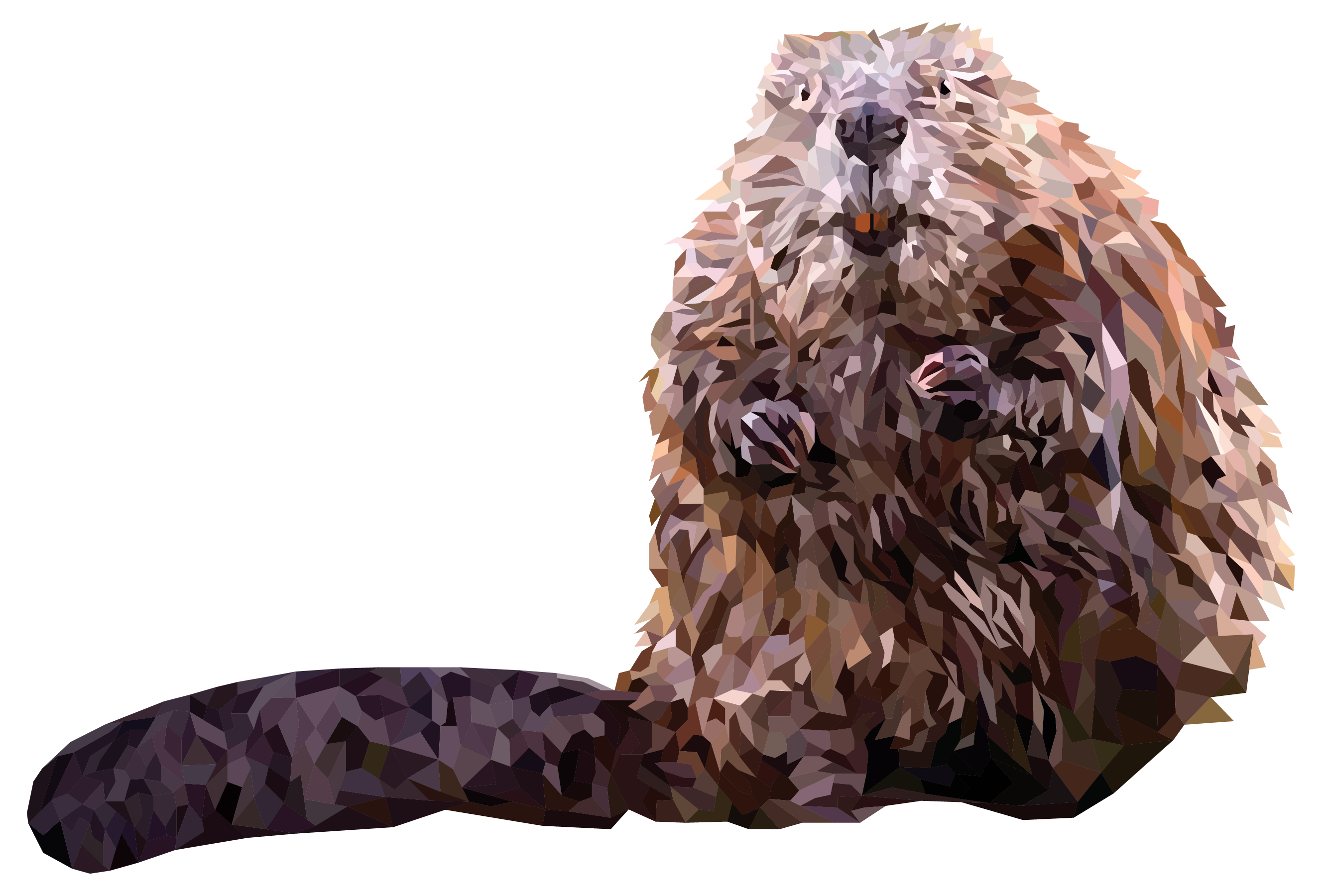
Castor Canadensis
The Beaver is a large, primarily nocturnal, semiaquatic rodent. Beavers are known for building dams, canals, and lodges homes. They are the second-largest rodent in the world. The beaver’s fur consists of long, coarse outer hairs and short, fine inner hairs. The fur has a range of colors, but usually is dark brown. The beaver has many traits suited to this lifestyle. It has a large, flat, paddle-shaped tail and large, webbed hind feet. The unwebbed front paws are smaller, with claws. The forepaws are highly dextrous, and are used both for digging, and to fold individual leaves into their mouth and to rotate small, pencil-sized stems as they gnaw off bark. Their eyes are covered by a membrane which allows the beaver to see under water. The nostrils and ears are sealed while submerged. Their lips can be closed behind their front teeth so that they can continue to gnaw underwater. A thick layer of fat under its skin insulates the beaver from its coldwater environment.
The North American beaver population was once more than 60 million, but as of 1988 was 6–12 million. This population decline is the result of extensive hunting for fur, for glands used as medicine and perfume, and because the beavers’ harvesting of trees and flooding of waterways may interfere with other land uses. They construct their homes, or “lodges”, out of sticks, twigs, rocks, and mud in lakes, streams, and tidal river deltas. These lodges may be surrounded by water, or touching land, including burrows dug into river banks. Beavers are well known for building dams across streams and constructing their lodges in the artificial ponds which form. Their colonies create one or more dams to provide still, deep water to protect against predators, and to float food and building material. Beaver have herbivorous preferences. They consume a mix of herbaceous and woody plants, which varies considerably in both composition and species diversity by region and season. They also eat cattails, water lilies, and other aquatic vegetation, especially in the early spring.