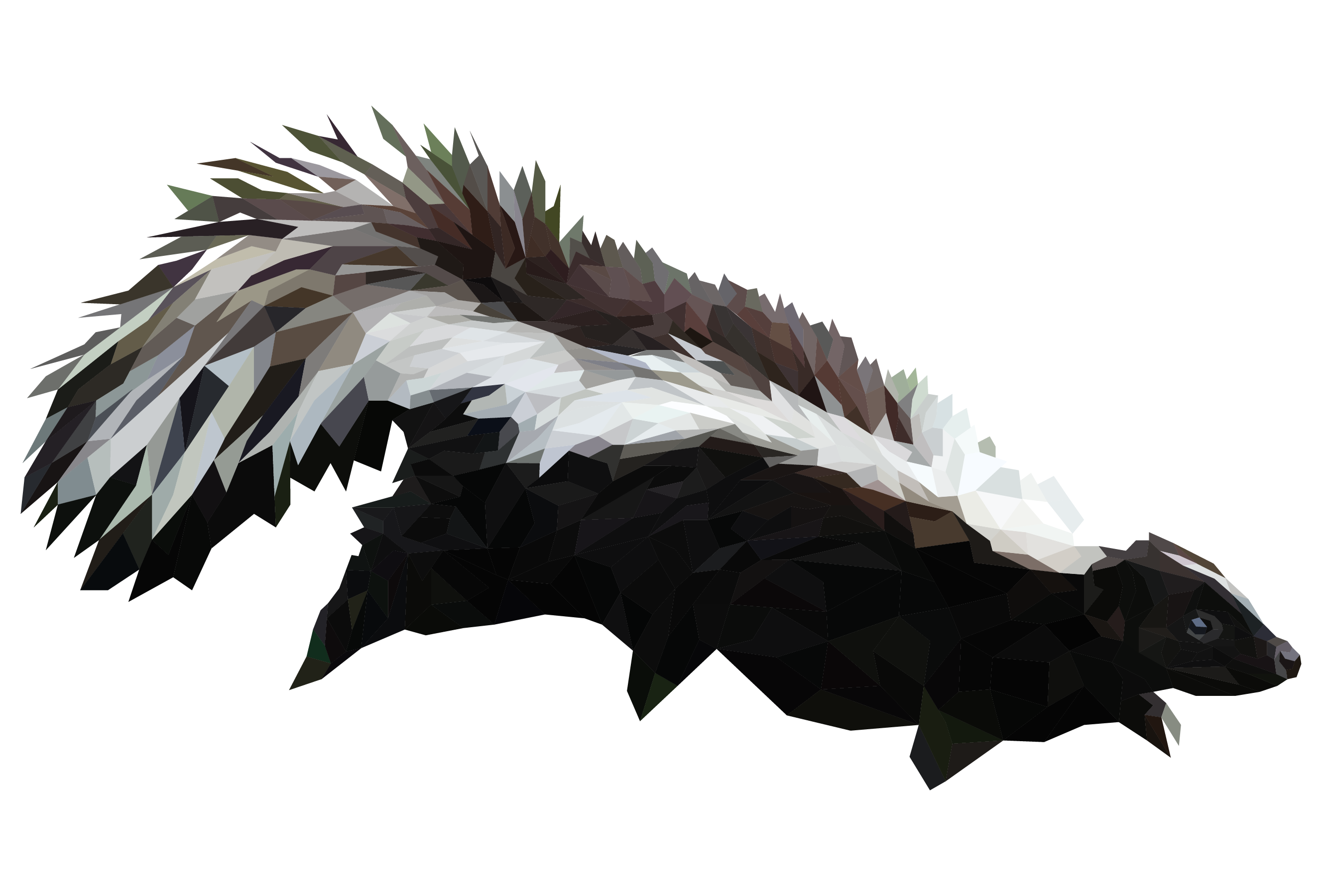
Mephitis Mephitis
The Striped Skunk is found across most of North America. Striped skunks are omnivores with few natural predators, save for birds of prey. Like all skunks, they possess highly developed, musk-filled scent glands to ward off predators. Striped skunks are one of the most recognizable of North America’s animals. The striped skunk inhabits a wide variety of habitats, particularly mixed woodlands, brushy corners and open fields interspersed with wooded ravines and rocky outcrops. Some populations, particularly in northwestern Illinois, prefer cultivated areas over uncultivated ones. The striped skunk may dig its own dens, though it will appropriate those abandoned by other animals should the opportunity present itself.
The striped skunk is a stoutly-built, short-limbed animal with a small, conical head and a long, heavily furred tail. The feet are plantigrade with bare soles, and are not as broad or flat as those of hog-nosed skunks. The forefeet are armed with five long, curved claws adapted for digging, while those on the hind feet are shorter and straighter. Their color patterns of fur vary greatly, but generally consist of a black base with a white stripe extending from the head which divides along the shoulders, continuing along the flanks to the rump and tail. Like all skunks, the striped skunk possesses two highly developed scent glands, containing about 15 milliliters of musk each,which provides a chemical defense against predation. It can be sprayed at a distance of several meters! While primarily an insectivore, the striped skunk is adaptable enough to incorporate other animals and even vegetable matter into its diet. The most frequently consumed insects include grasshoppers, beetles, crickets, and caterpillars.