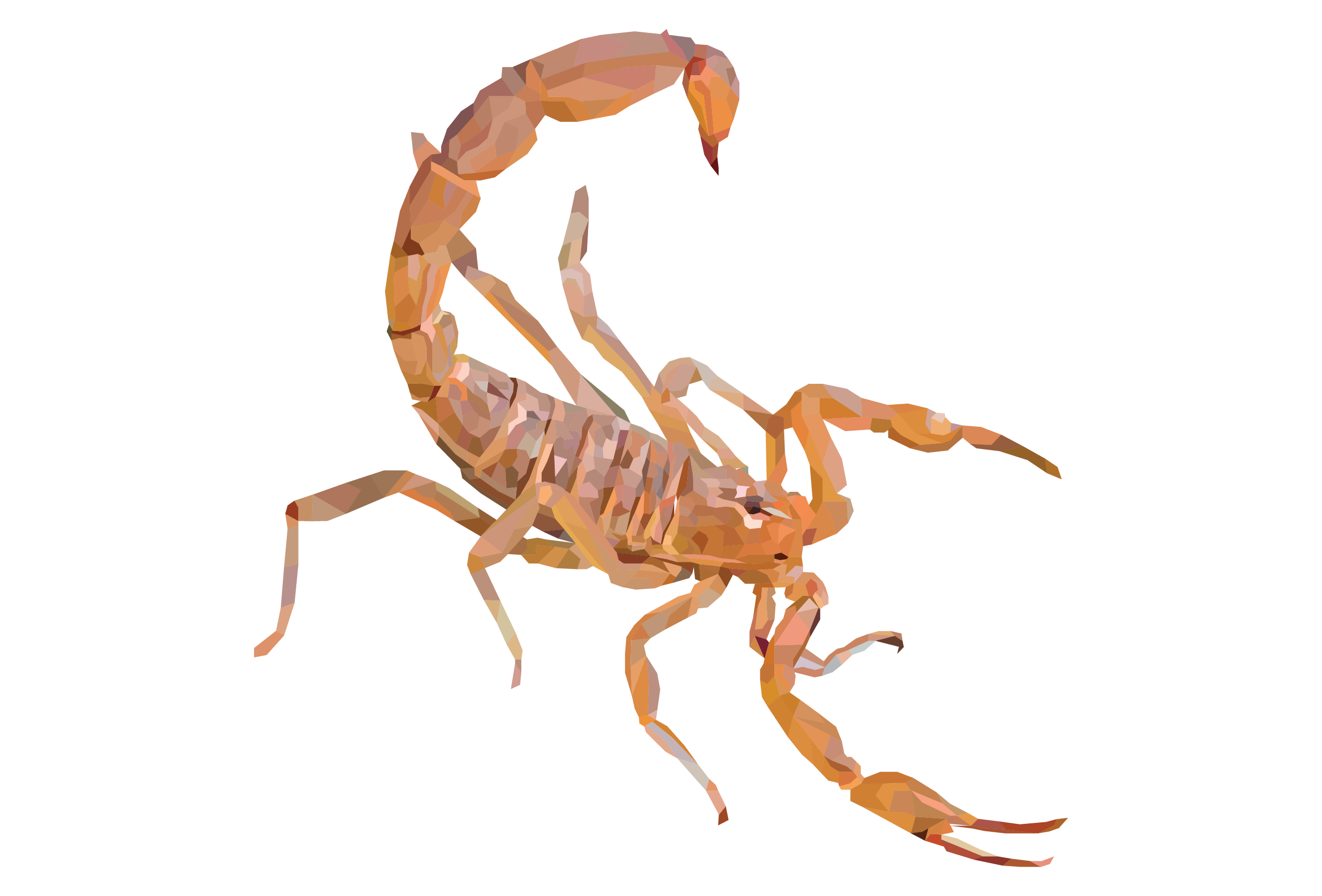
Centruroides Sculpturatus
The Arizona Bark Scorpion is a small light brown scorpion common to the Sonoran Desert in southwest United States and northwestern Mexico. Bark scorpions are tan or light beige tone in color and very small making them difficult to detect especially on natural terrain. They are not known to seek out people but look for places to hide unless provoked or defending their young. The bark scorpion is nocturnal and particularly well adapted to the desert: layers of wax on its exoskeleton make it resistant to water loss. Nevertheless, bark scorpions hide during the heat of the day, typically under rocks, wood piles, or tree bark. Bark scorpions do not burrow, and are commonly found in homes, requiring only 1/16 of an inch for entry. The range of the Arizona bark scorpion is from southern California, southern Arizona and western New Mexico. They are also found in Baja California, Sonora and Chihuahua, Mexico. Arizona bark scorpions prefer riparian areas with mesquite, cottonwood, and sycamore groves, all of which have sufficient moisture and humidity to support insects and other prey species. The bark scorpion prey on small and medium-sized animals such as beetles, spiders, crickets, cockroaches and other scorpions.
Centruroides scorpions are unusual in that they are the only genus in the southwest that can climb walls, trees, and other objects with a sufficiently rough surface. Bark scorpions practice negative geotaxis, preferring an upside down orientation, which often results in people being stung due to the scorpion being on the underside of an object. The bark scorpion is the most venomous scorpion in North America, and its venom can cause severe pain in adult humans, typically lasting between 24 and 72 hours. An antivenom was developed for this species at Arizona State University by Dr. Herbert L. Stahnke, and produced in quantities sufficient to treat individuals within the state of Arizona.