Lepus Californicus
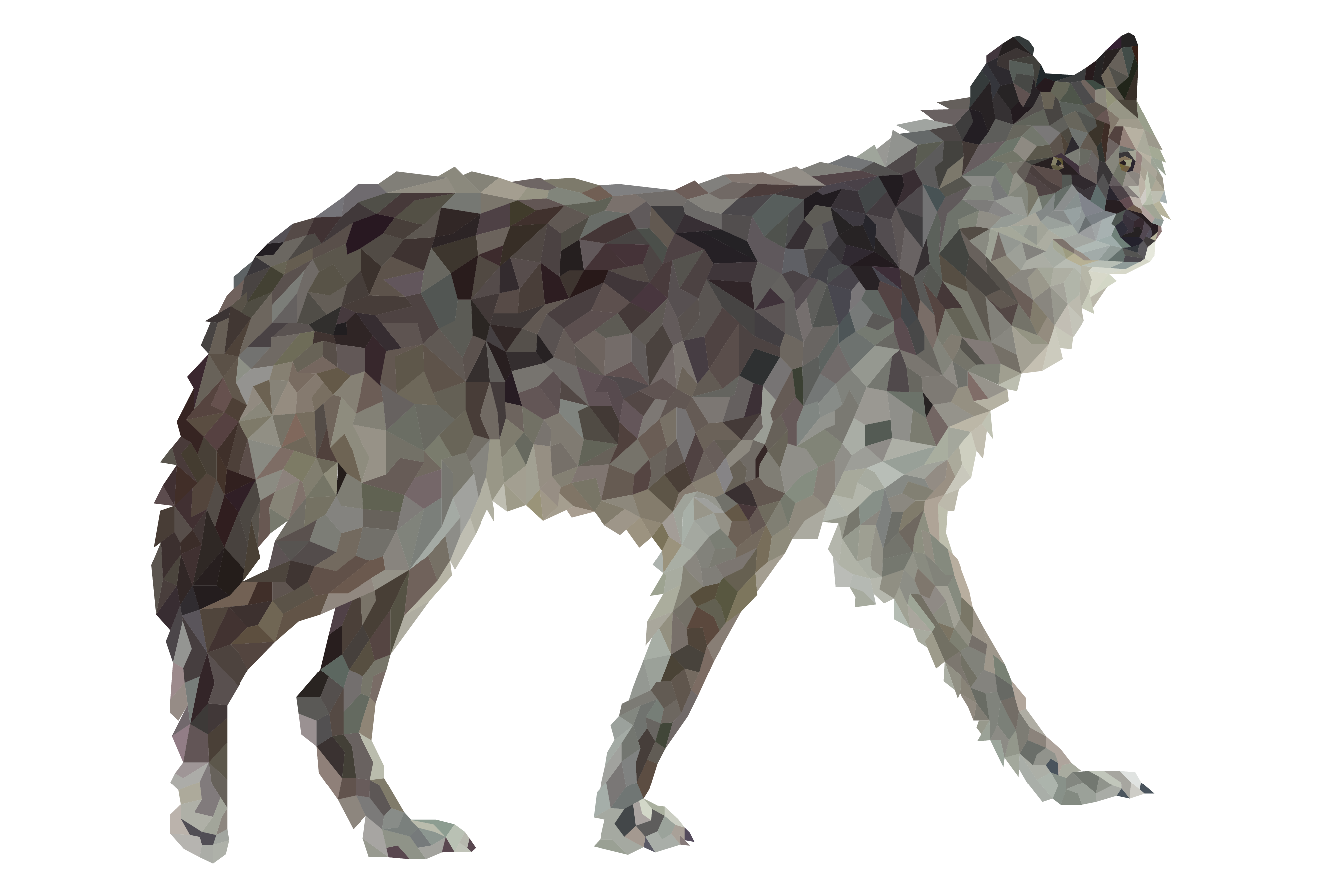
The Gray Wolf is a canine native to the wilderness and remote areas of Eurasia and North America. The wolf is distinguished from other Canis species by its less pointed ears and muzzle, as well as a shorter torso and a longer tail. The wolf is related closely to smaller Canis species, such as the coyote and the golden jackal. The fur of a wolf is usually mottled white, brown, gray, black, and banded. Up to 38 subspecies of wolf have been recognized including the domestic dog!
The wolf is most specialized for cooperative game hunting as demonstrated by its physical adaptations to tackling large prey, its more social nature, and its highly advanced expressive behavior. It travels in nuclear families consisting of a mated pair accompanied by their offspring. Offspring may leave to form their packs on the onset of sexual maturity and in response to competition within the pack for food. Wolves are also territorial and fights over territory are among the principal causes of wolf mortality. The wolf is mainly a carnivore and feeds primarily on large wild hooved mammals. Single wolves or mated pairs typically have higher success rates in hunting than larger packs. Wolves move around their territory when hunting, using the same trails for extended periods. After snowfalls, wolves find their old trails and continue using them. These follow the banks of rivers, the shorelines of lakes, through ravines overgrown with shrubs, through plantations, or roads and human paths. Wolves can quickly achieve speeds of 31–37 mph. They can leap 16 ft horizontally in a single bound, and can maintain rapid pursuit for at least 20 minutes. The wolf’s sense of smell is comparable to that of the domestic dog. Both have a sense of smell at least 10,000 times more sensitive than that of humans. Wolves construct dens for pups during the summer period. When building dens, females make use of natural shelters like fissures in rocks, cliffs overhanging riverbanks and holes thickly covered by vegetation.